Best Greyhound Betting Sites – Bet on Greyhounds in 2026
Loading...
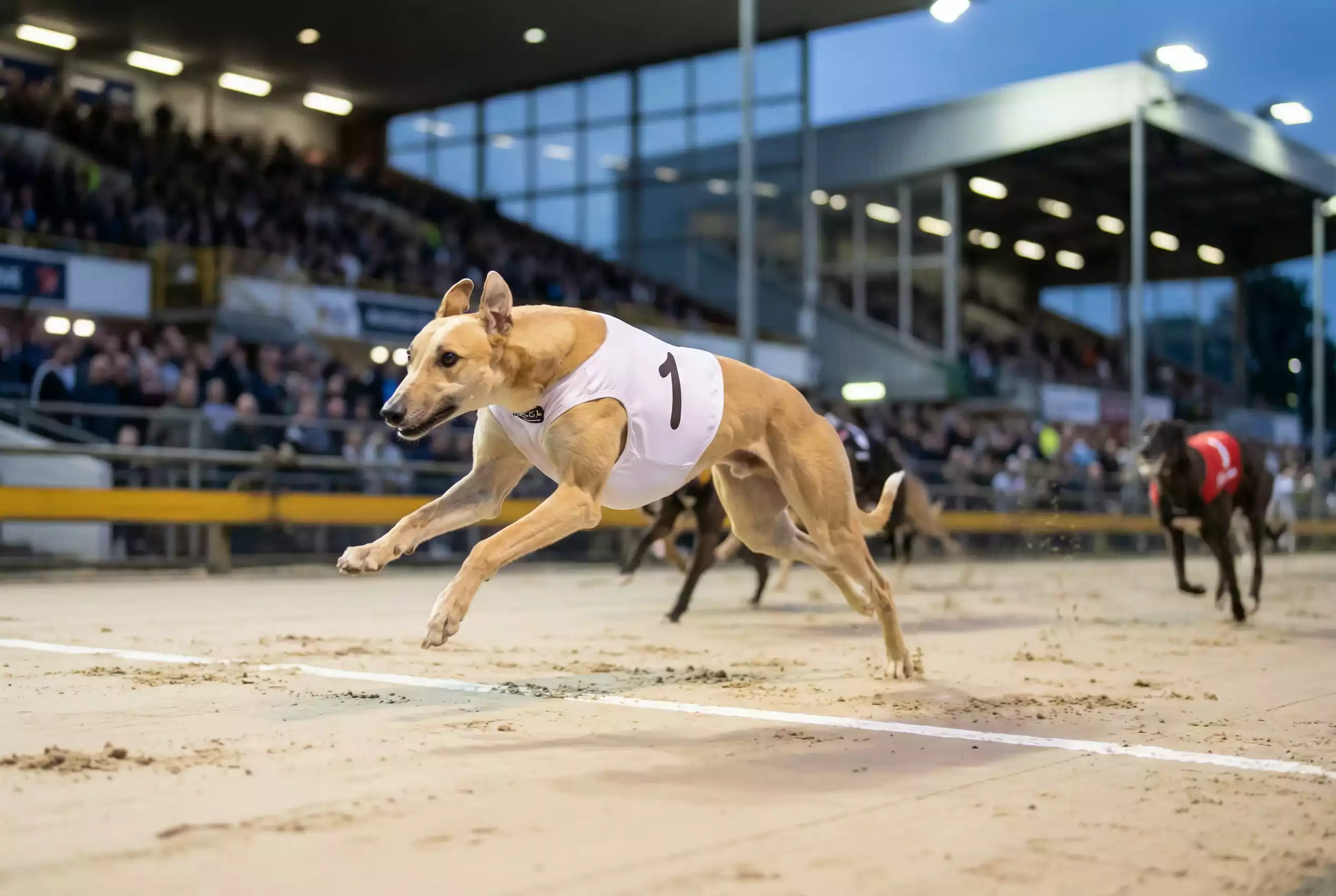
Ask any experienced greyhound punter which trap wins most, and you will hear the same answer: trap 3. The white jacket outperforms statistical expectation at track after track, averaging above 18% win rate nationally against the 16.6% theoretical baseline. This is not coincidence. The white jacket’s advantage isn’t coincidence—it’s design.
The elevated trap 3 win rate reflects the interaction of three factors: geometric position, seeding allocation, and running style flexibility. Understanding why trap 3 wins more than it should helps punters identify when this advantage is strongest and when it may be overvalued by markets that reflexively favour the white jacket regardless of specific conditions.
This analysis explains the mechanisms behind trap 3’s success and examines venue-specific data showing where the white jacket performs best. The goal is moving beyond the simple observation that trap 3 wins most toward understanding why, and applying that understanding to betting decisions.
The Middle Position Advantage
Trap 3 occupies the central inside position, offering geometric benefits without the crowding risks that affect trap 1. According to Oxford Stadium analysis, trap 3 averages above 18% win rate across UK tracks, consistently outperforming both the theoretical baseline and adjacent traps.
The middle position provides options. Dogs in trap 3 can challenge for the rail if traps 1 and 2 are slow to break, or they can hold a middle line if the inside is congested. This tactical flexibility gives trap 3 runners choices that pure railers and pure wide runners lack. When the field bunches at the first bend, the trap 3 dog often finds racing room while others are blocked.
Buffer positioning contributes to trap 3’s success. With dogs on both sides, trap 3 runners are somewhat protected from the extremes of inside crowding and outside isolation. They avoid the direct rail traffic that can trap inside dogs against the rail, and they avoid the extra distance that outside runners must cover. The middle path turns out to be the most efficient path more often than theory would suggest.
First bend dynamics favour trap 3. At the crucial first bend, where most greyhound races are decided, trap 3 dogs arrive with options. If the inside is clear, they take it. If it is crowded, they swing slightly wide and find running room. This adaptability means trap 3 dogs avoid more trouble than their trap position alone would predict. Dogs that avoid interference maintain momentum; dogs that encounter trouble lose it.
The middle position advantage explains why trap 3 outperforms trap 2 despite trap 2’s closer proximity to the rail. Trap 2 faces crowding pressure from trap 1 runners seeking the rail and from trap 3 runners with designs on the same space. Trap 3 has more room to manoeuvre and fewer dogs fighting to occupy its preferred line.
Geometry and adaptability combine to create trap 3’s edge. The position is not as close to the rail as trap 1, but the practical ability to find clear running more consistently produces superior results across large sample sizes.
Seeding and Trap 3
The GBGB seeding system plays a significant role in trap 3’s elevated performance. Middle runners—dogs coded M on race cards—receive allocations to traps 2 through 5, with trap 3 being a preferred position for dogs with demonstrated tactical flexibility. The seeding system effectively places adaptable dogs in the position best suited to exploit adaptability.
Middle runners are selected for their ability to adjust running lines based on race circumstances. Unlike pure railers who commit to the inside or pure wide runners who commit to the outside, middle runners read the race and respond. When these dogs receive trap 3 allocations, the position’s inherent advantages combine with the dog’s running style to compound the edge.
The seeding creates a feedback loop. Dogs that perform well from trap 3 are often middle runners. Middle runners receive trap 3 allocations because the system recognises their flexibility. The trap’s statistics therefore reflect not just positional advantage but also a concentration of the dogs best suited to exploit that advantage.
Railers occasionally receive trap 3 allocations when trap composition requires it. A race with only one railer might see that dog in trap 1, with middle runners filling traps 2 through 5. In these compositions, trap 3 may contain a middle runner with less natural affinity for inside running than the trap 1 railer. The statistical advantage persists because the seeding system generally matches running style to position effectively.
Understanding seeding helps punters interpret trap 3 statistics. The white jacket’s advantage is not purely positional; it reflects the quality and style of dogs allocated there. A trap 3 dog coded as a railer rather than a middle runner may not offer the same tactical flexibility that drives the trap’s elevated statistics. Reading seeding codes alongside trap numbers provides more nuanced assessment than trap position alone.
Track-Specific Trap 3 Data
Trap 3’s national average masks meaningful variation between venues. At some tracks, the white jacket dominates even more strongly than the 18% average suggests. At others, alternative positions outperform.
Romford has shown particularly strong trap 3 performance. Betting analysis documented periods where Romford’s trap 3 won 28 out of 98 races—a 28.5% rate that dramatically exceeds both theoretical probability and national average. Such concentrations may reflect hot streaks rather than permanent advantage, but they illustrate the upper bound of trap 3 performance at venues where conditions align favourably.
Tracks with pronounced inside or outside bias show different trap 3 profiles. At Towcester, where trap 1 wins 20% of races, trap 3 still performs well but faces competition from the dominant inside position. At Harlow, where trap 6 wins 21%, trap 3’s advantage is reduced because outside running is rewarded more than at typical venues.
Balanced tracks often show the strongest trap 3 advantage. When no position carries extreme bias, the flexibility that trap 3 offers becomes more valuable. Dogs in the middle can exploit whatever opportunities arise, rather than competing against structural advantages held by other positions.
Punters should examine venue-specific trap 3 statistics rather than assuming the national average applies everywhere. A track where trap 3 wins 22% presents different betting opportunities than one where it wins 16%. The white jacket remains generally advantageous, but the degree of advantage varies enough to affect value assessments.
Sample size matters for individual track statistics. Recently opened venues like Dunstall Park lack the data volume to establish reliable trap 3 patterns. Historical patterns from closed venues like Crayford no longer apply to active racing. Focus on established tracks with consistent configurations for the most reliable trap 3 data.
Key Takeaway
Trap 3’s elevated win rate reflects the combination of middle position advantages and seeding practices that place adaptable dogs there. The white jacket wins above 18% nationally because middle runners in the central inside position have tactical options that pure railers and wide runners lack. This advantage is structural, not accidental.
Venue-specific variation exists within this general pattern. Some tracks show trap 3 dominating even more strongly; others show reduced advantage due to competing biases. The white jacket’s advantage isn’t coincidence—it’s design, but the degree of advantage depends on where you are betting. Understanding both the mechanism and the variation helps punters identify when trap 3 offers genuine value.