
UK Greyhound Traps Explained: The Complete Guide to Numbers, Colours and Statistics
Every greyhound race in Britain begins the same way: six dogs, six starting boxes, one mechanical hare. But the UK greyhound traps—those numbered metal gates lined up at the start—tell a far more complex story than their simple appearance suggests. The trap a dog draws can shape its entire race, influencing running lines, crowding risk, and ultimately, whether a punter's bet lands or burns.
The sport has changed considerably since that first official meeting at Belle Vue, Manchester on 24 July 1926. What began as a novelty attraction has evolved into a regulated industry spanning 18 GBGB-licensed stadiums across England, from Towcester's rural oval to the urban floodlights of Romford. The centenary celebrations in 2025 marked a hundred years of greyhound racing in Britain—a milestone that coincided with the lowest injury rates the sport has ever recorded and some of the most sophisticated track management in its history. As Mark Bird, CEO of the Greyhound Board of Great Britain, noted: "It is heartening that the British Government continues to take an evidence-based view of licensed greyhound racing in Britain."
For punters, understanding how traps work is not optional; it is foundational. The difference between a dog seeded into trap 1 versus trap 6 can mean the difference between a clean run on the rail and a nightmare of early crowding. The statistics bear this out: some traps consistently outperform theoretical probability, and certain tracks exhibit biases so pronounced that ignoring them amounts to betting blind. From the starting boxes, the numbers tell the real story.
This guide breaks down every element of the UK trap system—how dogs are allocated to boxes, what the jacket colours signify, which traps win most at each track, and how to factor all of this into a coherent betting approach. Whether you are new to greyhound racing or simply want to sharpen your edge, the data here comes directly from official GBGB records and covers the full landscape of British greyhound racing as it stands in spring 2026.
What You Need to Know About UK Greyhound Traps
- Trap 3 averages over 18% win rate nationally—but trap bias varies dramatically by venue. Towcester's trap 1 hits 20%, while Harlow's trap 6 achieves 21%.
- Dogs are seeded into traps based on running style: Railers get inside positions (1-2), Wide runners get outside (5-6), and Middle runners fill the centre.
- Weather shifts trap performance. Rain favours inside traps because wet surfaces penalise the wider turning arcs required by outside positions.
- The 355,682 races run at GBGB tracks in 2024 provide the statistical foundation for reliable trap analysis—but smaller venue-specific samples require caution.
- Trap-based betting markets, including trap challenge and odds/evens, allow punters to exploit positional bias without predicting individual race winners.
What Are Greyhound Traps? The Basics
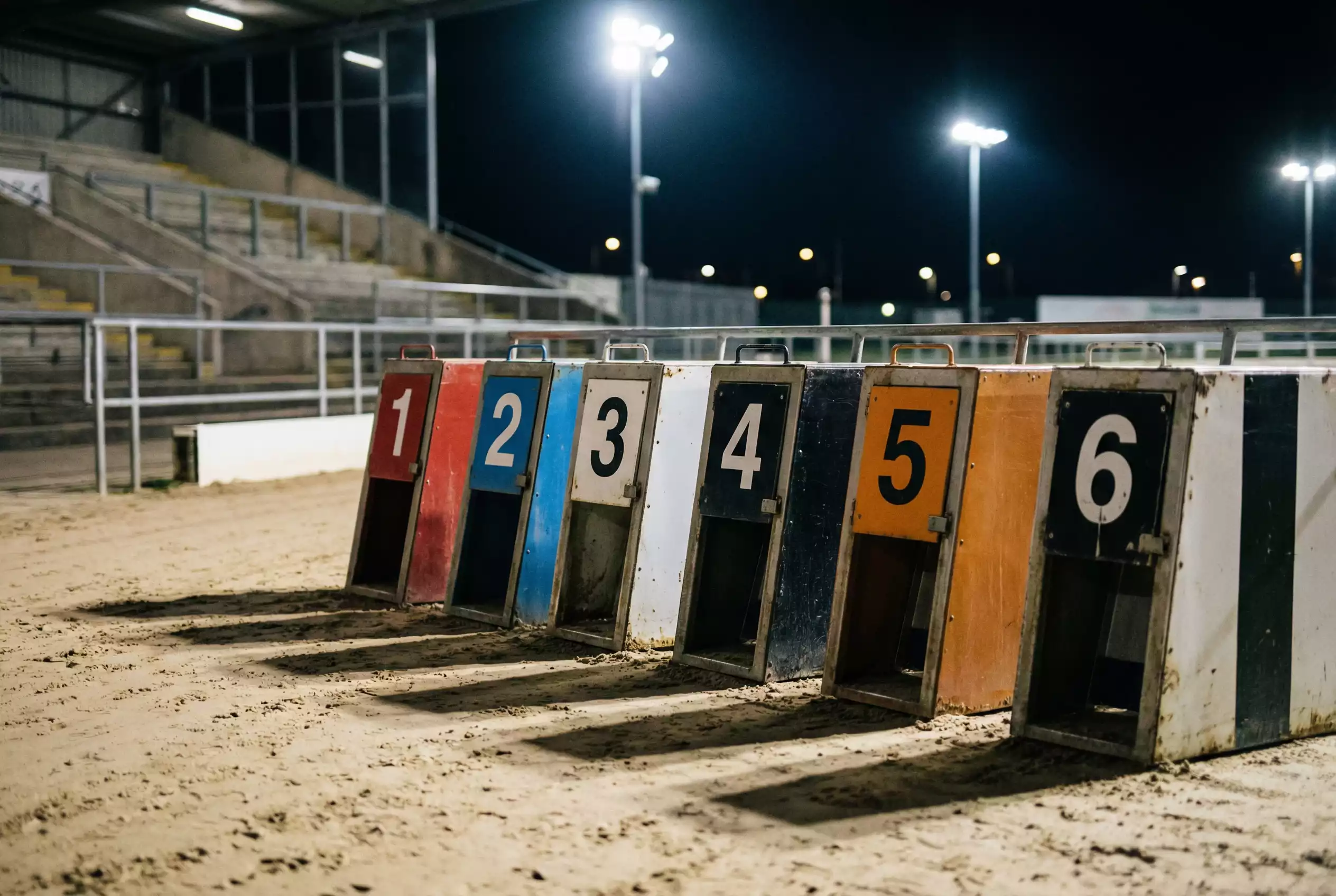
A greyhound trap is the metal starting box from which each dog begins its race. In British racing, six traps are used, numbered sequentially from the inside rail outward. Trap 1 sits closest to the inner running rail, trap 6 occupies the widest position furthest from it. Each trap opens simultaneously when the mechanical hare passes, releasing all six dogs at identical moments to ensure a fair start.
The Six-Trap System
The numbering is straightforward but critical. Trap 1, painted red, hugs the inside rail—the shortest route around the track. Traps 2, 3, and 4 occupy the middle ground, while traps 5 and 6 sit progressively wider. In theory, each trap carries a 16.6% probability of producing the winner; one in six, evenly distributed. In practice, this neat mathematical model rarely survives contact with actual racing.
Track geometry matters. A dog in trap 1 has immediate access to the rail but must maintain that position through the first bend, often while faster starters from middle traps converge on the same line. A dog in trap 6 faces the longest path to the first bend but encounters less initial crowding and more room to build speed. Neither position is inherently superior—everything depends on the individual dog's running style and the configuration of its rivals.
How the Start Works
Modern starting traps use an electromagnetic mechanism to ensure simultaneous release. When the mechanical hare—a motorised lure running on an outside rail—accelerates past the starting boxes, a signal triggers all six trap doors to spring open at precisely the same moment. The dogs, which have been loaded into their respective boxes moments earlier, explode forward in pursuit.
Track Dimensions and Trap Relevance
British greyhound tracks vary considerably in size and shape, and this variation directly affects which traps perform best. A tight oval with short runs to the first bend places enormous emphasis on trap position, since dogs have little time to establish racing lines before the initial crowding point. Longer, galloping tracks allow more opportunity for dogs to overcome poor draws through sheer pace.
The distance from trap to first bend—the "run-up"—is arguably the single most important measurement for evaluating trap bias at any given track. At venues where this distance is minimal, inside traps gain a significant advantage because dogs starting there reach the bend first and can dictate the racing line. At tracks with longer run-ups, middle and even outside traps become more competitive.
Trap Colours: Visual Identification Guide
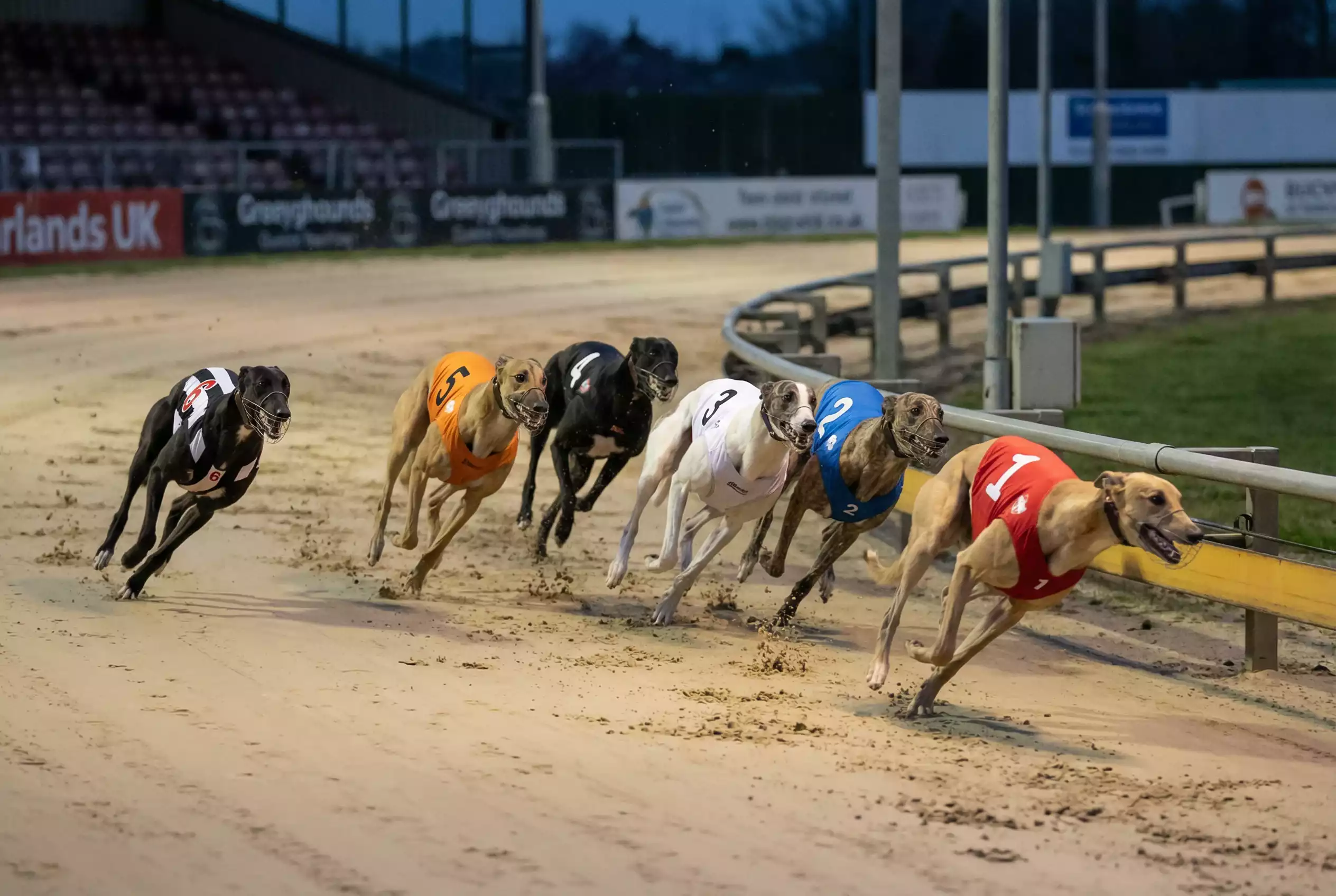
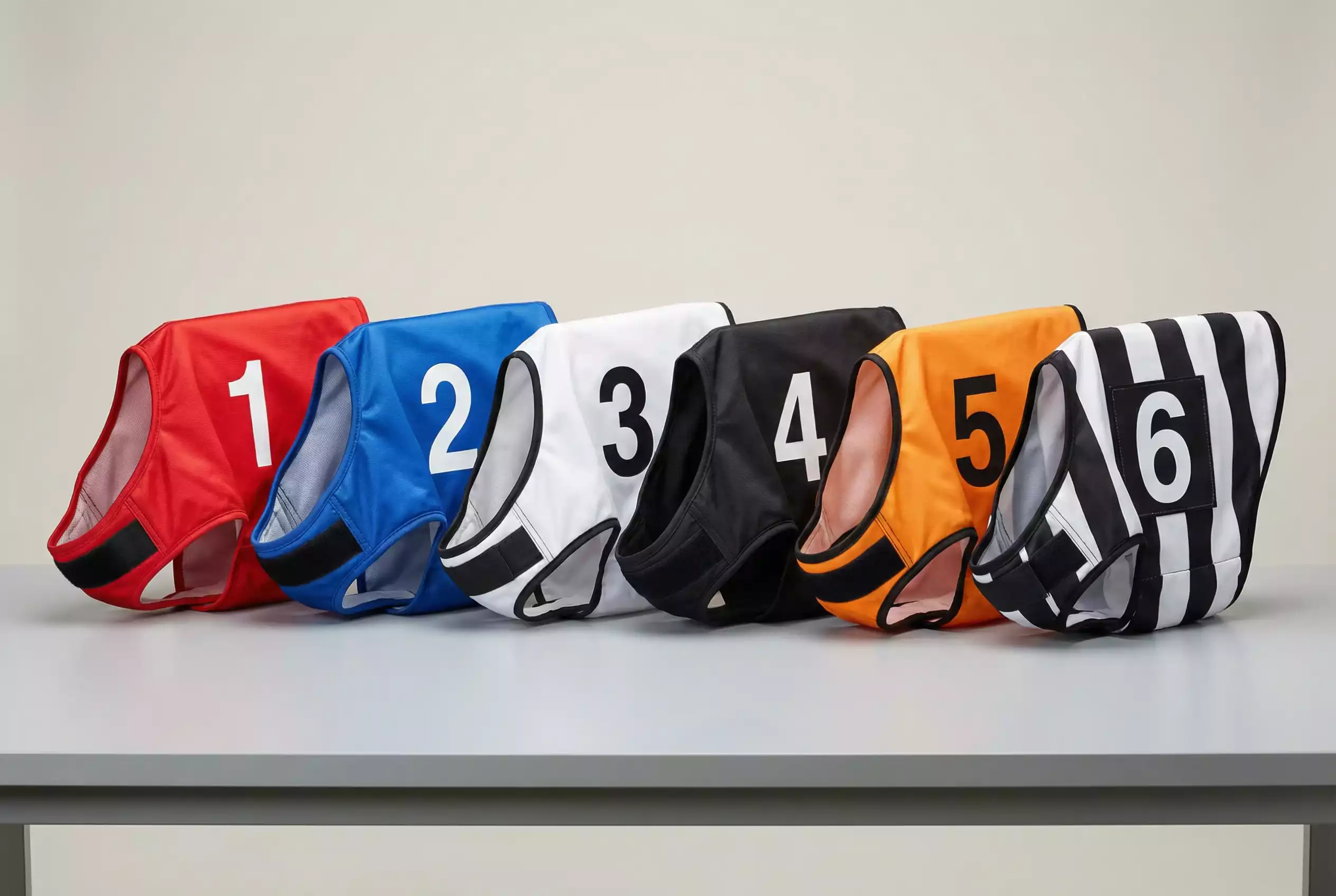
Every greyhound wears a coloured racing jacket that corresponds to its trap number. These colours are standardised across all GBGB-licensed tracks in England, making identification instant for both spectators at the track and punters watching remotely.
The Six Standard Colours
Trap 1: Red — The inside berth wears a bright red jacket, the colour most associated with greyhound racing imagery. Its position on the rail means trap 1 dogs are often the first visible when the field exits a bend.
Trap 2: Blue — Immediately outside the red jacket sits the royal blue. Distinct enough to stand out against the track surface and other jackets, making trap 2 dogs easy to track through crowded fields.
Trap 3: White — The middle-inside position wears white. Against the darker colours of traps 1 and 2, the white jacket is highly visible, particularly under floodlights. Trap 3's statistical dominance at many tracks has made this the colour many punters watch most closely.
Trap 4: Black — The middle-outside trap wears black. This can be harder to track during evening meetings when the dog blends into shadows, particularly on the back straight, away from direct lighting.
Trap 5: Orange — The bright orange of trap 5 stands out vividly against the green track surface, making trap 5 dogs easy to follow even when running wide lines.
Trap 6: Black and White Stripes — The outermost position wears a distinctive striped jacket, alternating black and white. This pattern is unique to trap 6 and impossible to confuse with any other position.
Why Colour Matters
In a sport where races last under thirty seconds and dogs reach speeds exceeding 40 mph, instant identification is essential. For bettors watching multiple screens or reviewing replays, colour coding allows rapid assessment of race dynamics—where each jacket finished, whether crowding occurred, and how different positions developed through the race.
Quick Reference: UK Trap Colours
- Trap 1 — Red
- Trap 2 — Blue
- Trap 3 — White
- Trap 4 — Black
- Trap 5 — Orange
- Trap 6 — Black and White Stripes
The Seeding System: How Dogs Are Allocated
Unlike a pure lottery, trap allocation in British greyhound racing follows a structured seeding system designed to match each dog's running style with an appropriate starting position. This system—governed by GBGB Rules 76 and 80—aims to produce safer racing and more competitive contests by reducing the likelihood of dogs crossing each other's paths early in the race.
Understanding R/M/W Classifications
Every racing greyhound in Britain receives a running-style classification based on observed behaviour in previous races. The three categories are:
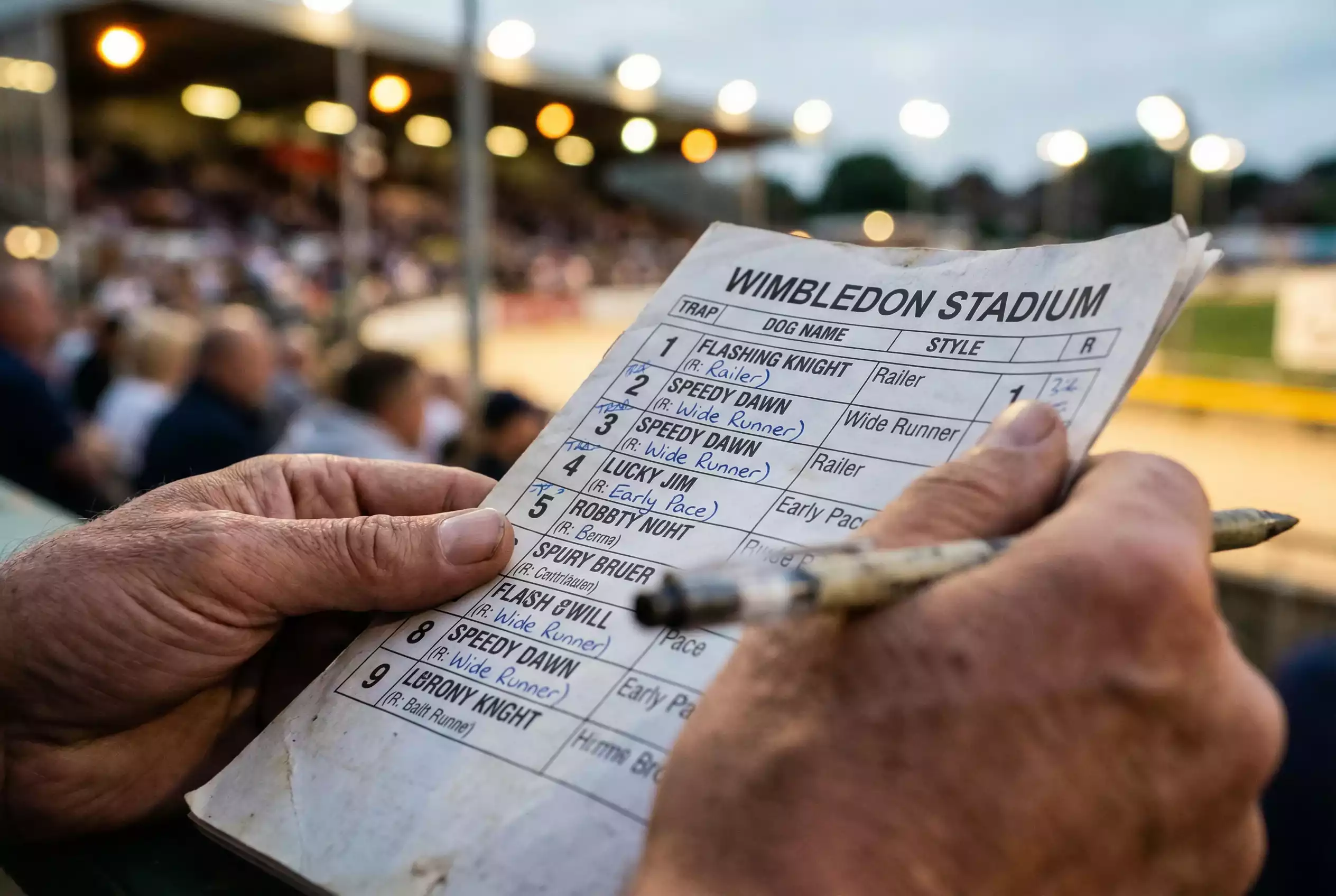
Railer (R) — A dog that naturally seeks the inside running rail. Railers want to hug the shortest route around the track and are seeded into traps 1 and 2, where they can find the rail immediately without needing to cut across other runners.
Middle (M) — A dog comfortable running in the centre of the track, neither committed to the rail nor preferring the widest lines. Middle runners are flexible and adaptable, suitable for traps 2, 3, 4, or 5 depending on race composition.
Wide (W) — A dog that naturally runs wide, often taking an outside line around bends. Wide runners are seeded into traps 5 and 6, where they can sweep around the field without causing interference.
How Classifications Are Determined
Racing managers observe dogs during their maiden races and early career outings. A greyhound's natural preference typically becomes apparent within its first few competitive starts—some dogs immediately gravitate to the rail, while others consistently seek space on the outside. Once established, the classification is recorded and applied to all future trap draws, though managers can reclassify based on observed evidence.
Rule 76: The Automated Draw
GBGB Rule 76 governs the trap allocation process for graded races. Once dogs are entered and classified, the draw itself is conducted using cryptographic random number generation—a computerised system that ensures no human intervention can influence which specific trap a dog receives within its eligible range. For example, if three railers are entered in a race, the system randomly assigns them to traps 1, 2, and 3. A railer cannot draw trap 5 or 6, but which of the available inside positions it receives is genuinely random.
Why Seeding Matters for Bettors
Understanding seeding transforms how you read race cards. When you see a dog marked as "R" in trap 1, you know this is precisely where its running style should place it—a natural fit. But what if a middle runner draws trap 1? That dog might run the rail, or it might seek its preferred centre line, potentially causing interference.
Seeding also explains why some traps consistently outperform the theoretical 16.6% win rate. If railers are systematically placed in traps 1 and 2, and railers tend to be fast-starting dogs that can capitalise on the inside position, those traps will accumulate above-average win rates not because of the trap itself but because of the type of dog consistently placed there.
"As a licensed sport, we can ensure greyhounds benefit from the care and attention they deserve and have far more protection than domestic pets. Moreover, we have the data to prove our welfare standards are strong."
By placing dogs where they naturally want to run, GBGB reduces collision risk, minimises injury potential, and creates racing that is both safer for the dogs and fairer for the punters.
Trap Statistics: What the Numbers Say
Theory suggests each trap should win 16.6% of races—simple division of one hundred by six. Reality is considerably more nuanced. Across the 355,682 races conducted at GBGB tracks in 2024, trap performance varied significantly by position, track, and distance. Understanding these variations is essential for anyone betting seriously on greyhound racing.
National Win Rate Patterns
When aggregated across all British tracks, certain patterns emerge consistently. Trap 3 tends to win more often than theoretical probability would suggest, averaging above 18% at many venues. Trap 4 often underperforms. Traps 1 and 6 show the most dramatic track-to-track variation, which makes sense given their extreme positions—inside rail advantage versus wide running room.
The middle traps—2, 3, 4, and 5—produce more stable win rates nationally because they occupy compromise positions that neither maximise nor minimise specific advantages. A dog in trap 3 can seek the rail or run middle; a dog in trap 4 can hold its line or drift wide. This flexibility tends to smooth out the extremes visible in trap 1 and trap 6 data.
Why Trap 3 Outperforms
The consistent over-performance of trap 3 has attracted considerable analysis from both bettors and racing professionals. Several factors contribute:
First, seeding places middle runners in trap 3, and middle runners are often the most versatile, adaptable dogs in any field. Their ability to run either line—rail or wide—depending on race circumstances makes them less vulnerable to bad luck than dogs committed to a single path.
Second, trap 3 occupies the ideal position for the first bend. These dogs can drift to the rail if space opens or hold their line if the inside traps bunch up. They are close enough to challenge for the lead but not so exposed to the crowding that trap 1 sometimes experiences.
Third, trap 3 dogs are less likely to encounter severe interference. They do not have the rail to their left (like trap 1) or open space to their right (like trap 6), both of which can attract competitors cutting across. Instead, they have dogs on both sides who are more likely to maintain parallel lines.
Statistical Fact: Trap 3 averages over 18% win rate across UK tracks, outperforming the theoretical 16.6% baseline by more than one percentage point.
The Inside Rail Question
Conventional wisdom holds that trap 1 has an inherent advantage because it offers the shortest route around the track. The mathematics support this—running on the rail means covering less ground than any other position. Yet trap 1 win rates do not universally dominate.
The answer lies in crowding. Trap 1 dogs must maintain their rail position against significant pressure. The dogs to their outside all want to move toward the rail on the first bend, creating a convergence point where multiple runners compete for limited space. If the trap 1 dog is fast enough to clear the field before this convergence, it wins easily. If not, it gets squeezed.
This dynamic explains why trap 1 performance varies so dramatically between tracks. At venues with long run-ups to the first bend, trap 1 dogs have time to establish position. At tight tracks where the first bend arrives almost immediately, trap 1 dogs face intense early pressure.
Trap 6 and Wide Running
The outside trap presents the opposite trade-off. Trap 6 dogs cover the most ground but face the least interference. A fast wide runner can sweep around the entire field without encountering a single rival, provided it has sufficient pace to overcome the distance disadvantage.
At certain tracks, trap 6 produces remarkable win rates. Harlow, for example, records trap 6 wins at approximately 21%—significantly above theoretical expectation and one of the highest outside-trap win rates in British racing. The track's configuration evidently suits wide-running dogs, creating opportunities that more than compensate for the extra distance travelled.
Sample Size and Statistical Reliability
Any trap statistics must be evaluated against sample size. A win rate calculated from 50 races carries far less predictive power than one calculated from 5,000. The national figures—drawn from over 350,000 races annually—are highly reliable. Individual track statistics, based on smaller samples, require more caution.
Seasonal variations also affect reliability. Weather conditions change trap performance; summer and winter racing produce different patterns. A trap that dominates in dry conditions may underperform when the track surface is wet. Punters should ideally consult statistics from comparable conditions rather than relying solely on aggregate annual figures.
Theoretical Probability Versus Reality
The gap between theory and practice reflects everything that makes greyhound racing interesting. If traps genuinely produced random outcomes, betting would reduce to pure chance. The consistent deviations from 16.6%—trap 3's over-performance, trap 4's under-performance, the extreme variations at specific tracks—create informational edges for those who study the data.
| Trap | Theoretical Win Rate | Typical Observed Range |
|---|---|---|
| Trap 1 | 16.6% | 14%–20% |
| Trap 2 | 16.6% | 15%–18% |
| Trap 3 | 16.6% | 17%–20% |
| Trap 4 | 16.6% | 14%–17% |
| Trap 5 | 16.6% | 15%–18% |
| Trap 6 | 16.6% | 13%–21% |
The observed ranges reflect the extremes found across different tracks. A punter who knows their venue can apply track-specific figures rather than these national averages, gaining a more precise view of what each trap position truly means in the races they are betting.
Understanding Track Bias
Track bias—the tendency of certain traps to win more frequently at specific venues—is not a myth or a punters' superstition. It is a measurable phenomenon driven by physical factors: track geometry, surface conditions, distance to the first bend, and weather effects. Every GBGB track exhibits some degree of bias, and identifying it separates serious bettors from recreational punters throwing darts at race cards.
What Causes Track Bias
The primary driver is track configuration. British greyhound tracks vary considerably in their dimensions, bend radii, and run-up distances. A tight track with a short run to the first bend massively advantages inside traps because dogs in positions 1 and 2 reach the bend first and can establish the racing line before wider-drawn rivals arrive. A galloping track with long straights dilutes this advantage, giving outside traps more opportunity to use their wider angle.
Bend camber also matters. Some tracks have more pronounced banking on their turns, which affects how dogs of different running styles handle the curves. A heavily cambered bend suits dogs that naturally lean into the turn; a flatter bend favours dogs that prefer to stay upright and accelerate through the curve. These seemingly minor engineering choices create persistent biases.
Surface Conditions and Maintenance
Track surfaces require constant maintenance. Sand-based surfaces lose consistency as racing continues; sections wear differently depending on where dogs run most frequently. The rail line, being the shortest and most trafficked path, often develops different characteristics than the middle or outside lines.
GBGB mandates rigorous track maintenance standards. Each licensed stadium receives four visits annually from the Sports Turf Research Institute, whose inspectors assess surface consistency, bend profiles, and overall track condition. This doubled oversight since 2022 reflects the regulator's commitment to maintaining fair racing surfaces. According to the GBGB Welfare Strategy Progress Report, this increased scrutiny has contributed to the lowest injury rates in the sport's history.
Safety Record: The 2024 injury rate of 1.07% across 355,682 races represents the lowest figure ever recorded in British greyhound racing. The track fatality rate has halved to 0.03% since 2020, while 94% of greyhounds were successfully retired (compared to 88% in 2018). GBGB invested £168,000 through the Track Safety Committee Fund to maintain these standards.
Interactive Tool
STRI Visits Before 2022, and Average Races Per Track
Back-calculate the pre-2022 inspection frequency from "doubled oversight," and see how many races each licensed track handles on average.
Visits Before 2022
-
-
Current Visits/Year
-
Multiplier
-
Extra Visits/Year
-
What this guide states only as a ratio, never as a number: "Each licensed stadium receives four visits annually from the Sports Turf Research Institute... This doubled oversight since 2022." The pre-2022 figure is never spelled out — it works out to 2 visits per year, meaning 2 extra visits were added.
Average Races Per Track
-
-
Total Races
-
Tracks
-
Per Track Per Day
-
What this guide gives as two separate facts: "the 355,682 races run at GBGB tracks in 2024" and separately "18 GBGB-licensed stadiums." The average races per track is never calculated — it's 19,760 races per track per year, roughly 54 races per track per day.
Weather Effects on Trap Performance
Rain fundamentally changes track dynamics. A wet surface becomes slower and more slippery, affecting dogs differently depending on their running style and trap position. Inside traps often gain advantage in wet conditions because the rail line, being the shortest, requires less turning—and turning on a wet surface costs more momentum than on a dry one.
Wide-running dogs suffer disproportionately in rain. Their sweeping outside lines require more sustained grip, and wet surfaces degrade that grip. The extra distance they cover becomes more punishing when every stride is less efficient. Observant punters adjust their trap valuations accordingly: inside traps increase in value during wet meetings, outside traps decrease.
Wind also influences trap bias, though less dramatically than rain. Headwinds slow the field, generally benefiting dogs that can stay close to the rail and minimise energy expenditure. Crosswinds can create directional effects, pushing dogs toward or away from the rail depending on wind angle and track orientation.
The Safety Connection
Track bias analysis is not merely a betting exercise. Extreme bias can indicate problems with track surface or geometry that affect safety. A track where trap 1 wins 25% of races and trap 6 wins 10% suggests something is mechanically wrong—the surface may have worn unevenly, or the bend configuration may be creating dangerous crowding patterns.
"In leading the development of the GBGB Strategy, I spoke to academics, specialists, vets, global experts in animal welfare and a wide range of stakeholders to ensure that what we have put in place is world class in its approach to the welfare of greyhounds."
— Professor Madeleine Campbell, EBVS European Veterinary Specialist
This expert involvement extends to track design and maintenance. Modern understanding of track bias informs how venues are constructed and maintained, with the goal of producing racing that is both safe and fair. When bias becomes extreme, it triggers review processes that can result in track modifications.
Identifying Bias From Data
Punters can identify track bias through systematic record-keeping. The essential data points are trap-by-trap win rates over a meaningful sample—at least 200 races for initial indications, 500 or more for reliable patterns. Comparing these rates to the 16.6% baseline reveals which positions consistently over- or under-perform.
Time period matters. A trap might show bias over one month but normalise over a year as track maintenance corrects surface irregularities. Conversely, a long-term bias probably reflects permanent track characteristics that are unlikely to change. Punters should examine both short-term and long-term data to distinguish between transient conditions and structural bias.
Applying Bias Knowledge
Knowing a trap is biased creates betting edge only if that bias is not already reflected in the market. If everyone knows trap 3 wins 20% at a particular track, bookmakers will adjust their prices accordingly, eliminating the value. The edge lies in identifying bias before it becomes common knowledge, or in understanding nuances—such as weather-dependent bias shifts—that the general market misses.
From the starting boxes, bias tells the real story of each track. A dog's form, speed, and ability still matter, but trap position provides the context in which those qualities express themselves. At high-bias tracks, even the best dog in the race can be undone by a poor draw. At low-bias tracks, quality tends to prevail regardless of starting position.
Track-by-Track Comparison
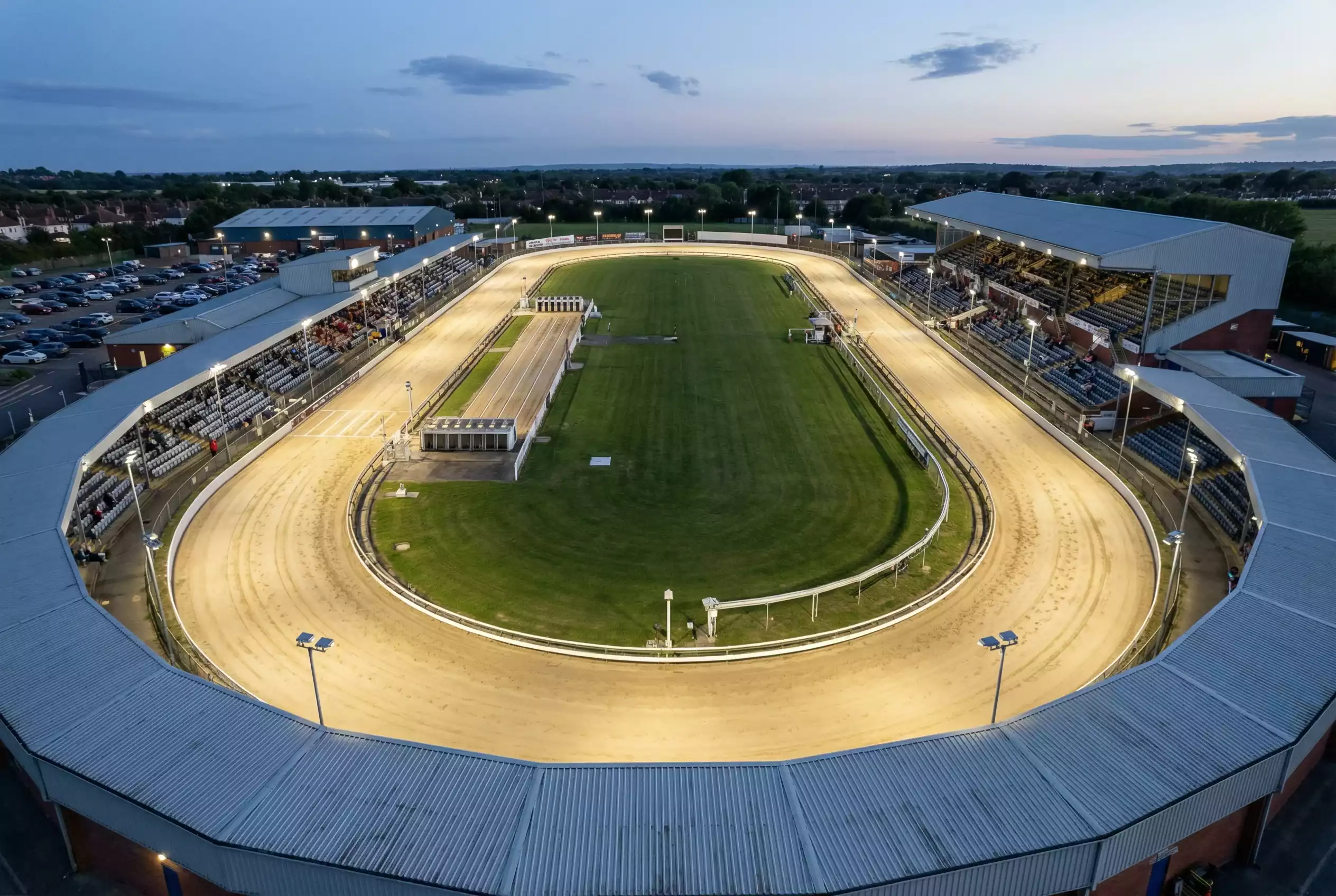
Britain's 18 GBGB-licensed stadiums each present distinct characteristics that influence trap performance. What works at Romford may fail at Towcester; what dominates at Harlow may underperform at Monmore.
London and South East
Romford — Perhaps the most famous track in British greyhound racing, Romford runs over 250m and 400m distances. The track's tight configuration creates pronounced inside-trap bias at shorter distances. Trap 3 has produced notable streaks here, including one period where it accumulated 28 wins from 98 races—a 28.5% strike rate.
Harlow — The standout anomaly in British racing. Harlow's trap 6 achieves approximately 21% win rate, making it one of the highest outside-trap performances at any UK venue. The track's geometry suits wide-running dogs, creating opportunities that punters who fixate on inside traps consistently miss.
Midlands
Towcester — The largest track in British greyhound racing, Towcester's galloping configuration produces some of the most extreme trap 1 bias in the country. The inside trap achieves approximately 20% win rate. The long run-up to the first bend allows trap 1 dogs to establish position before crowding occurs.
Monmore Green — West Midlands' premier venue shows variable trap bias depending on distance. The shorter races favour inside traps, while standard distances produce more balanced results.
Dunstall Park — The newest addition to the GBGB circuit, opening in September 2025. Early data suggests moderate inside bias consistent with other Midlands venues.
Northern Tracks and Outliers
Kinsley — Notable for producing the lowest favourite win rate among graded races, with only 31.60% of market leaders successful in 2024 according to OLBG statistics. This suggests a track where trap draw and racing luck play outsized roles.
The Valley — At the opposite extreme, The Valley records approximately 42% favourite success rate—the highest in British racing. This track rewards quality over trap position, suggesting bias effects are minimal.
| Track | Region | Key Trap Bias | Notable Statistic |
|---|---|---|---|
| Towcester | Midlands | Trap 1: ~20% | Highest inside bias |
| Harlow | South East | Trap 6: ~21% | Highest outside bias |
| Kinsley | North | Variable | 31.60% favourite rate |
| The Valley | South | Minimal | 42% favourite rate |
| Romford | London | Trap 3: elevated | Trap 3 streaks documented |
Distance and Seasonal Variations
Most tracks offer multiple race distances, and trap bias often varies by distance. Shorter sprints—typically 250m to 300m—tend to show higher inside-trap bias because dogs have less time to establish position. Standard 400m-plus races dilute trap effects, giving all runners more opportunity to overcome poor draws.
Track bias also shifts seasonally. Winter racing on wet, cold surfaces produces different patterns than summer racing on dry, fast ground. The March 2026 racing calendar includes the full spring fixture list across all GBGB tracks, with current conditions favouring venues with well-maintained surfaces.
Trap-Based Betting Markets
Beyond the straightforward win market, British greyhound racing offers several betting options that explicitly reference trap position. These markets allow punters to bet on trap-related outcomes without needing to predict individual race winners—useful when you have strong views on trap bias but less certainty about which specific dog will capitalise.
The Trap Challenge
A trap challenge bet selects one trap number to win across a series of consecutive races at a single meeting. If that trap wins more races than any other single trap during the meeting, the bet wins. At a track where trap 3 consistently outperforms, a trap challenge on that position carries positive expectation over time—assuming the odds compensate appropriately for the probability.
Odds Versus Evens
The odds/evens market divides the six traps into two groups: odd numbers (1, 3, 5) versus even numbers (2, 4, 6). Punters bet on which group produces the winner. Each group contains three dogs, so theoretical probability is 50/50. Track bias makes this market interesting: if a track favours inside traps, the odds group may outperform.
Inside Versus Outside
The inside/outside market groups traps by position: traps 1, 2, and 3 as "inside" versus traps 4, 5, and 6 as "outside." Weather effects influence this market heavily—wet conditions generally favour the inside group because rail running becomes relatively more advantageous on slippery surfaces.
The Favourite Factor
The average favourite win rate across British greyhound racing stands at approximately 35.67% based on 2024 graded race data. Favourites drawn in advantageous traps convert at higher rates than those in disadvantageous positions. When the market favourite draws trap 1 at Towcester, its implied win probability should be higher than the same dog from trap 5. Bookmakers generally adjust for this, but imperfect adjustments create value.
Trap-based markets allow you to bet on positional bias without predicting individual winners. The trap challenge, odds/evens, and inside/outside markets each offer different ways to express views on trap performance.

British greyhound racing handles approximately $1.81 billion (£1.46 billion) in annual wagering—about a quarter of the global greyhound betting market. This substantial turnover ensures deep liquidity in trap-related markets at major meetings.
Frequently Asked Questions
Which trap wins the most in UK greyhound racing?
Trap 3 consistently produces the highest win rates across British greyhound tracks, averaging above 18% compared to the theoretical 16.6% expectation. The middle-inside position benefits from seeding middle runners—typically the most versatile dogs—into this trap, while the location offers optimal first-bend positioning without the rail pressure faced by trap 1 or the extra ground covered by outside positions.
However, trap performance varies significantly by venue. At Towcester, trap 1 achieves approximately 20% win rate due to the track's long run-up that suits inside draws. At Harlow, trap 6 dominates at around 21%—the highest outside-trap performance in UK racing. Punters should research specific track statistics rather than relying solely on national averages.
How are greyhounds allocated to traps?
GBGB uses a seeding system based on each dog's natural running style. Dogs are classified as Railers (R), Middle runners (M), or Wide runners (W) based on observed behaviour in previous races. Railers are seeded into traps 1 and 2, where they can find the inside rail immediately. Wide runners are allocated traps 5 and 6, allowing them to run their preferred outside line. Middle runners fill the remaining positions.
Within each category, trap assignment is determined by cryptographic random number generation under GBGB Rules 76 and 80. This automated system ensures fairness while matching dogs to traps that suit their running style, reducing collision risk and producing safer, more competitive racing.
Does weather affect trap performance?
Rain significantly shifts trap bias toward inside positions. Wet surfaces become more slippery, particularly on bends where dogs must grip to maintain speed. Inside traps benefit because the rail line requires less turning—and every turn on a wet track costs more momentum. Wide-running dogs from traps 5 and 6 suffer disproportionately, as their sweeping outside lines demand sustained grip that wet surfaces cannot provide.
Punters who track weather conditions can adjust their trap valuations accordingly. A trap 6 specialist that excels on dry summer ground may struggle on a wet winter surface. Conversely, inside traps that show moderate bias in normal conditions may become dominant when rain arrives. The key is understanding how each track's specific geometry interacts with changing surface conditions.
Glossary of Key Terms
Graded Race — a race where dogs are grouped by ability based on their recent performance times. Grading ensures competitive fields where all runners have comparable form.
Hare — the mechanical lure that dogs chase during a race. The hare runs on an outside rail and maintains a consistent distance ahead of the field.
Middle Runner (M) — a dog classified as preferring to race in the middle of the track, neither committed to the rail nor preferring wide lines. Middle runners are seeded into traps 2, 3, 4, or 5.
Open Race — a high-quality contest featuring elite greyhounds, governed by Rule 80. Open races may have different seeding arrangements than standard graded events.
Race Card — the official listing of all races at a meeting, including runner information, trap draws, form figures, and running-style classifications.
Railer (R) — a dog classified as naturally seeking the inside running rail. Railers are seeded into traps 1 and 2 to match their preferred racing line.
Run-up — the straight distance between the starting traps and the first bend. Longer run-ups generally reduce inside-trap advantage by giving all dogs time to establish position.
Seeding — the process by which GBGB allocates dogs to traps based on their classified running style (Railer, Middle, or Wide) under Rules 76 and 80.
Sectional Time — a split time recorded at specific points during a race, typically at each bend. Sectional times reveal early pace and help identify dogs with strong finishing speed.
Track Bias — the tendency of certain traps to win more frequently at a specific venue due to track geometry, surface conditions, or other physical factors.
Trap — the numbered starting box from which a greyhound begins a race. British tracks use six traps, numbered 1 (inside rail) to 6 (widest position).
Trap Challenge — a bet selecting one trap number to produce the most winners across all races at a single meeting.
Wide Runner (W) — a dog classified as naturally running wide lines around the outside of the track. Wide runners are seeded into traps 5 and 6.
