Best Greyhound Betting Sites – Bet on Greyhounds in 2026
Loading...
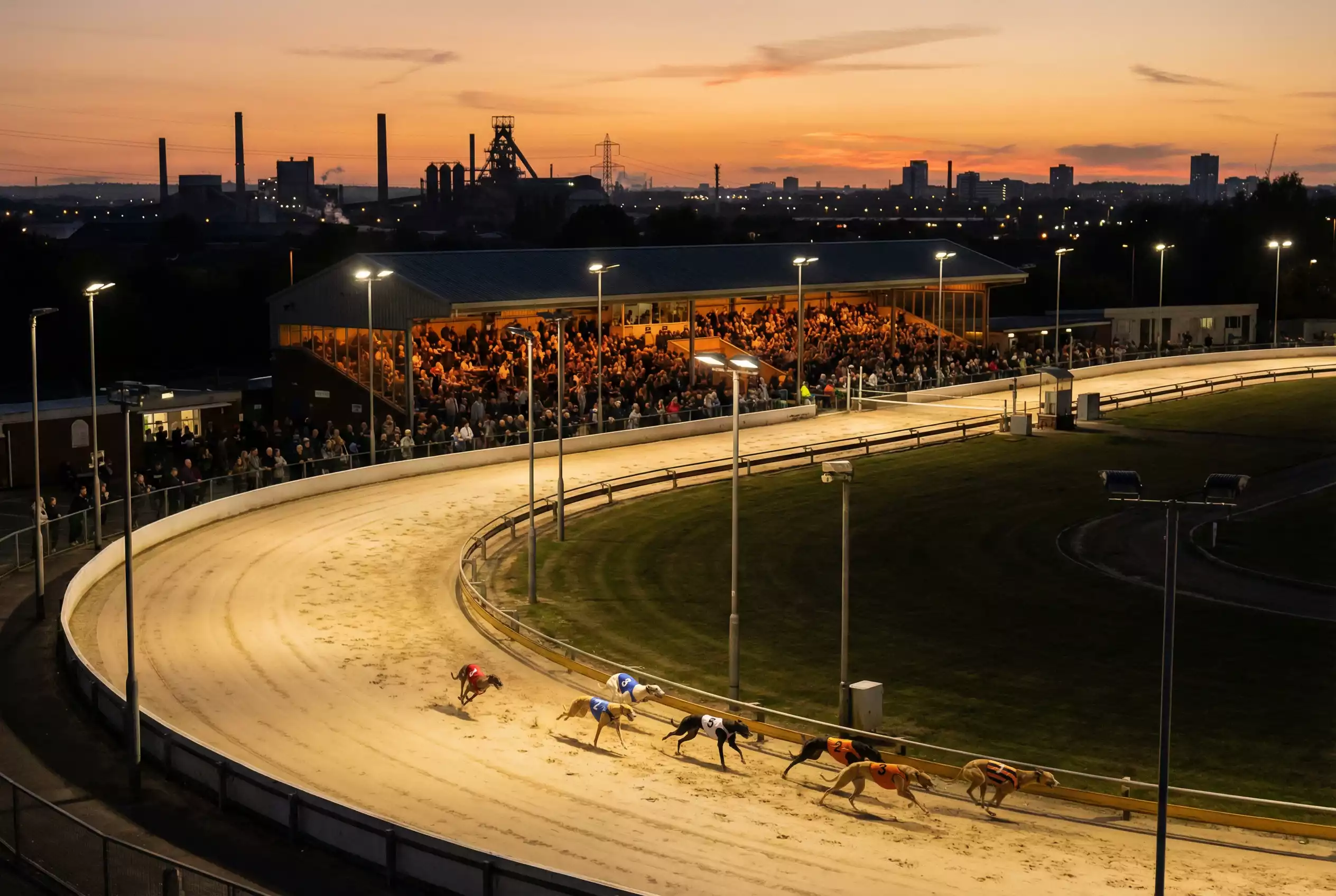
Monmore Green sits in Wolverhampton, West Midlands, anchoring greyhound racing in England’s industrial heartland. The track has operated since 1928, making it one of the oldest continuously running venues in British greyhound racing. Generations of Midlands punters have watched dogs burst from the traps here, and the stadium remains a focal point for regional racing.
The heart of Midlands racing. That description captures Monmore’s significance: a venue with deep local roots, competitive fields, and trap statistics that reward punters who study track-specific patterns. This guide examines what makes Monmore distinctive, from its specifications and history to the data that shapes betting decisions.
Track History and Specifications
Monmore Green opened in 1928, just two years after Belle Vue hosted Britain’s first licensed greyhound meeting. The stadium has witnessed the sport’s golden age in the 1940s, its long decline through the late twentieth century, and its stabilisation in the modern era. Through closures that eliminated dozens of rival tracks, Monmore endured—a testament to local support and competent management.
The track measures 415 metres in circumference, placing it among the standard-sized circuits in UK racing. Race distances include 264m, 480m, and 642m, covering sprints, standard trips, and staying events. The 480m distance, requiring four bends, accounts for the bulk of racing and produces the most reliable trap statistics.
Track configuration follows conventional British design: anti-clockwise running, sand-based surface, traps positioned on the back straight. The first bend arrives at a moderate distance from the boxes, neither as quick as Romford nor as extended as Towcester. This middle-ground geometry produces trap statistics that broadly favour inside positions without the extreme bias seen at some tracks.
Facilities at Monmore have been updated over the decades while retaining the venue’s traditional character. Covered grandstand seating, betting facilities, and hospitality areas serve regular racegoers and occasional visitors. The track’s accessibility from Wolverhampton city centre and major road links makes it convenient for punters across the Midlands and beyond.
Monmore’s longevity matters for statistical analysis. Decades of racing data reveal patterns that newer tracks cannot match. Dogs, trainers, and racing conditions have changed, but the physical track remains constant. That consistency allows punters to trust trap statistics built from large samples across multiple seasons.
Trap Performance Data
Monmore’s trap statistics, tracked by services like OLBG, show a pattern consistent with most UK tracks: inside positions outperform outside positions, with traps 1 and 2 posting win rates above the 16.67% theoretical expectation while traps 5 and 6 fall below it.
Trap 1 benefits from the shortest path to the first bend and the presence of railers seeded into this position. Dogs breaking cleanly from the red jacket often establish leads that they maintain throughout. The rail provides a reference line that dogs can follow without constant adjustment, saving energy for the closing stages. At Monmore, trap 1 regularly posts win rates in the 18-20% range, reflecting this structural advantage.
Trap 2 offers a similar inside line with slightly less crowding pressure, making it attractive for railers who need a beat more room at the break. The blue jacket does not hug the rail as tightly as the red, but it still benefits from inside positioning. Dogs drawn here can move to the rail if trap 1 breaks slowly or stay fractionally wide to avoid early trouble.
The middle traps—3 and 4—produce results closer to theoretical expectation. These positions suit middle runners seeded M, dogs without strong rail-seeking or wide-running tendencies. Their performance depends more on individual ability and less on track geometry, making them harder to assess from trap position alone. At Monmore, middle-trap analysis demands attention to form, sectional times, and running style rather than relying on positional bias.
Traps 5 and 6 face the disadvantages common to outside positions: more ground to cover, difficult angles into bends, and the risk of being pushed wider by dogs cutting across. Unlike Harlow, where trap 6 thrives, Monmore does not reward wide runners to the same degree. Punters should approach outside draws with appropriate caution, reserving support for dogs with proven ability from these positions.
Distance affects trap bias at Monmore. Over the sprint distance (264m), where only two bends feature, early pace matters intensely and inside traps dominate. Over the staying distance (642m), multiple bends provide more recovery opportunities, slightly reducing inside-trap advantage. The standard 480m trip falls between these extremes, producing the statistics most representative of the track’s overall character.
Weather conditions at Monmore influence trap outcomes as they do elsewhere. Wet tracks can reduce grip, affecting dogs that rely on sharp cornering. The sand-based surface drains reasonably well, but standing water after heavy rain may shift bias toward inside traps where dogs cover less distance and encounter fewer puddles.
Racing Calendar
Monmore operates a busy racing calendar with multiple meetings per week. Evening fixtures on weekdays attract after-work crowds, while weekend cards draw family audiences and more casual punters. Afternoon meetings supplement the schedule, providing content for betting shops and online streaming throughout the day.
The track hosts open races that attract top-class greyhounds from kennels across the Midlands and further afield. These feature events offer larger purses and competitive fields where grading and trap draw matter intensely. The best dogs from Wolverhampton and Birmingham kennels compete alongside visitors seeking prize money and prestige. Graded races fill the remaining cards, sorting dogs by ability and providing opportunities for dogs at every level.
Seasonal patterns influence racing quality. Busier periods see stronger fields as trainers concentrate their best dogs at major fixtures. Quieter periods may feature smaller fields or less competitive grading, creating opportunities for astute punters to find value in weaker contests. Punters following Monmore regularly learn to recognise these rhythms and adjust expectations accordingly.
Televised and streamed coverage extends Monmore’s reach beyond trackside attendance. Betting shop screens and online platforms carry live racing, allowing punters nationwide to wager on Midlands greyhounds without leaving home. This visibility supports betting turnover that helps sustain the track financially, linking Monmore into the broader network of UK greyhound racing content.
Local trainers dominate Monmore’s race cards, though dogs travel from across the region for the right opportunities. Familiarity with track conditions gives local dogs an edge—they have trialled on this surface, understand its quirks, and adapt their running to its demands. Punters can use trainer location as a secondary factor when assessing runners, favouring those with Monmore experience over visitors encountering the track for the first time.
Key Takeaway
Monmore Green embodies the continuity of British greyhound racing—a track operating since 1928, serving the Midlands with competitive racing year-round. Its trap statistics follow conventional patterns: inside positions outperform, middle traps produce expected results, and outside draws face structural disadvantages. As Mark Moisley, GBGB’s Commercial Director, has observed: “Revenue from bookmakers is declining year-on-year”—yet venues like Monmore, with their loyal local audiences and deep racing history, remain vital to the sport’s fabric. For punters, Monmore rewards familiarity with its specifications and historical data. The heart of Midlands racing beats steadily here, and those who study its rhythms find value that casual observers miss.