Best Greyhound Betting Sites – Bet on Greyhounds in 2026
Loading...
Introduction
Every greyhound that appears on a race card has been through a process that determines its trap number, its opponents, and the race it will contest. This process—from entry to draw to race—shapes the sport at every level. For punters, understanding how dogs end up in specific traps explains patterns that might otherwise seem random. The draw is not random; it follows rules designed to produce fair and competitive racing that rewards form study and careful analysis.
From entry to box, every step is tracked. That transparency is fundamental to the integrity of licensed racing. GBGB maintains systems that allocate dogs to races and traps according to clear criteria, preventing manipulation and ensuring that form study is meaningful. Knowing how the system works gives bettors context for interpreting the race card and assessing whether a dog has drawn a favourable position or faces a disadvantage from the start.
From Grading to Draw
The journey begins with grading. Each dog racing at a GBGB-licensed track holds a grade based on its recent performances. The grading scale runs from A1 at the top to D4 at the bottom, with letters representing quality bands and numbers indicating subdivisions. An A-grade dog is faster than a B-grade dog, which is faster than a C-grade, and so on. The system creates competitive racing by matching dogs of similar ability.
Grades are calculated using finishing times. When a dog wins or places, its time is recorded and compared against the track standard for that distance. Consistent fast times push a dog up the grades; slower times bring it down. The system is dynamic—grades update after every run, reflecting current form rather than historical reputation. A dog that ran A-class six months ago but has slowed will drop down the grades to face appropriate competition.
Trainers enter dogs for races that match their grade. A meeting will typically feature several races at different levels: an A race, a B race, perhaps a couple of D races. The racing manager compiles entries and checks that each dog meets the criteria for its intended race. Dogs entered for the wrong grade are redirected or withdrawn. The entry process requires trainers to declare their dogs before a deadline, typically two or three days before the meeting.
Once entries close, the racing manager reviews the field. If more dogs are entered than places available, selections are made based on factors like recent running, trainer representation, and the need to fill a competitive field. If fewer dogs enter than expected, races may be combined or downgraded. The goal is to produce six-dog fields where each runner has a realistic chance of winning.
Seeding determines which traps each dog is eligible for. Dogs classified as railers can be drawn in Traps 1 or 2; middle runners in Traps 2, 3, or 4; wide runners in Traps 4, 5, or 6. This ensures that running style matches position, reducing interference and producing cleaner racing. The seeding is assessed by racing officials based on how the dog has run in recent outings.
The Automated RNG System
With seeding confirmed, the actual trap draw takes place. Since 2025, GBGB has used an automated cryptographic random number generator to allocate traps within permitted ranges. This system removes human discretion from the final step, ensuring that no individual can influence which trap a specific dog receives.
The cryptographic RNG is designed to be unpredictable and verifiable. Each draw is logged, creating an audit trail that can be checked if disputes arise. The technology is similar to that used in online gambling and financial systems where randomness must be both genuine and provable.
Before automation, trap draws were conducted manually by racing officials. While rules existed to ensure fairness, the potential for human error or influence created concerns. Automation eliminates these concerns. A railer seeded for Traps 1-2 receives either Trap 1 or Trap 2 with equal probability, determined by the RNG at the moment of the draw.
The draw typically occurs shortly before race cards are published, giving trainers and punters time to assess the implications. A dog’s trap affects its odds—a railer in Trap 1 at a track with inside bias will be shorter than the same dog drawn in Trap 2. The market incorporates trap information immediately, and early prices often shift once draws are announced.
For punters, the key point is that the draw is genuinely random within seeding constraints. A favoured dog might draw a strong trap or a weak one. Analysing historical performance from specific traps becomes valuable precisely because the allocation is fair—if a dog consistently underperforms from Trap 4, that pattern reflects something real about its ability to run from that position, not manipulation of the draw.
Fairness and Transparency
The draw system exists to maintain fairness. Without it, trainers might collude to position dogs favourably, or racing managers might unconsciously bias draws toward local favourites. Automation removes these possibilities. Every dog receives an equal shot within its seeding category.
Transparency supports the betting market. Punters need confidence that form reflects ability, not manipulation. If draws were influenced, historical statistics would be unreliable, and analysing trap performance would be pointless. The RNG system provides the assurance that statistical patterns are genuine.
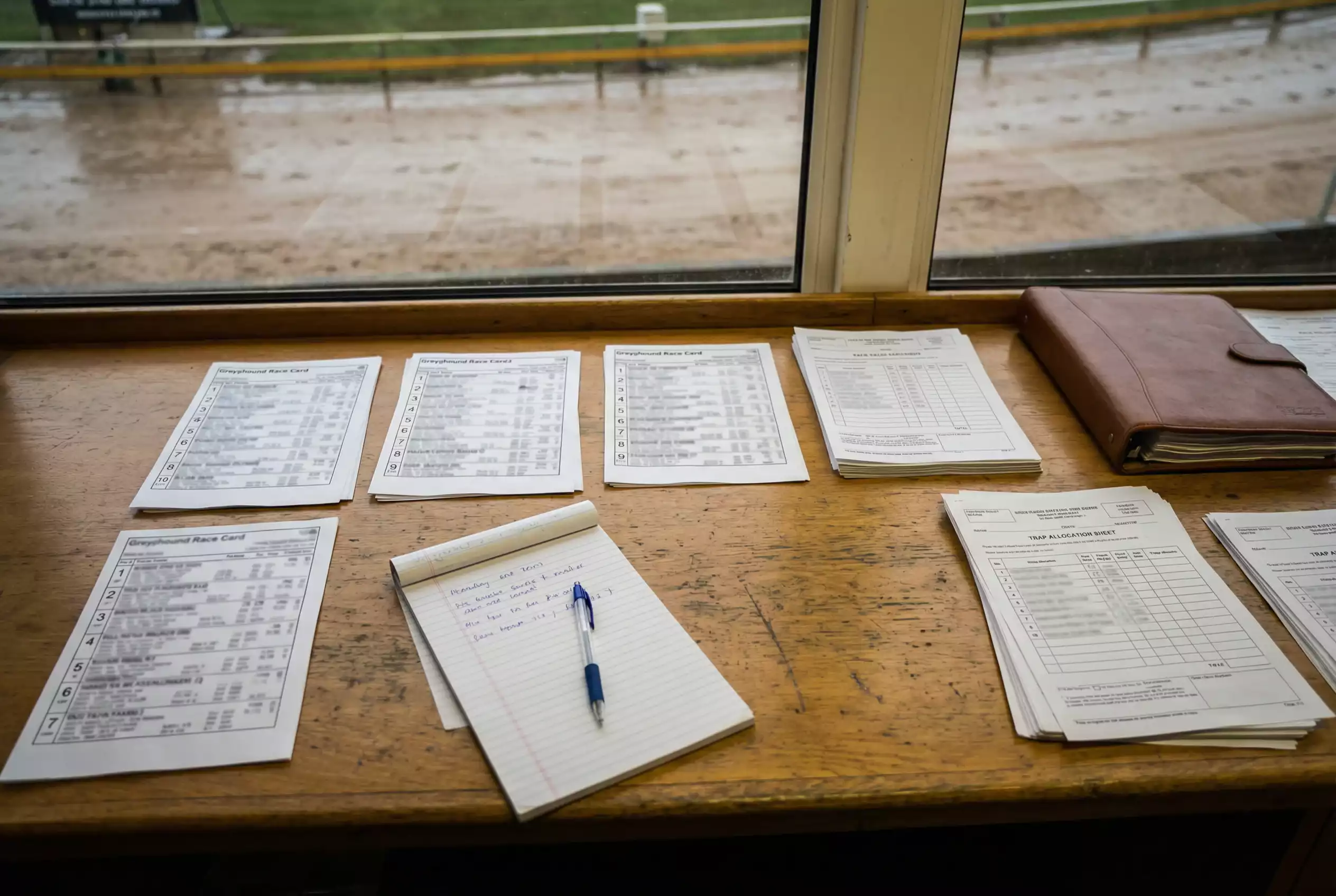
GBGB publishes draw results as part of the race card. Punters can see not only which trap each dog has drawn but also the seeding that determined its eligible range. This information allows for informed betting decisions. A middle runner drawn in Trap 3 at a track where Trap 3 dominates is a different proposition from the same dog drawn in Trap 4.
Complaints about the draw are rare. The automated system has been widely accepted by trainers and punters as an improvement over manual methods. Occasional bad luck in draws is part of the sport, but systematic unfairness has been designed out. The rules that govern racing depend on confidence in the draw, and that confidence rests on the technical integrity of the RNG system.
Key Takeaway
The trap draw follows a structured process: grading determines race entry, seeding determines eligible traps, and an automated RNG allocates the final position. From entry to box, every step is tracked and verifiable. For punters, this means that trap statistics reflect genuine patterns rather than manipulation. Understanding the draw process adds context to form study and explains why certain dogs end up in certain positions. The system is designed for fairness, and fairness is what makes betting on greyhound racing a meaningful exercise.