Best Greyhound Betting Sites – Bet on Greyhounds in 2026
Loading...
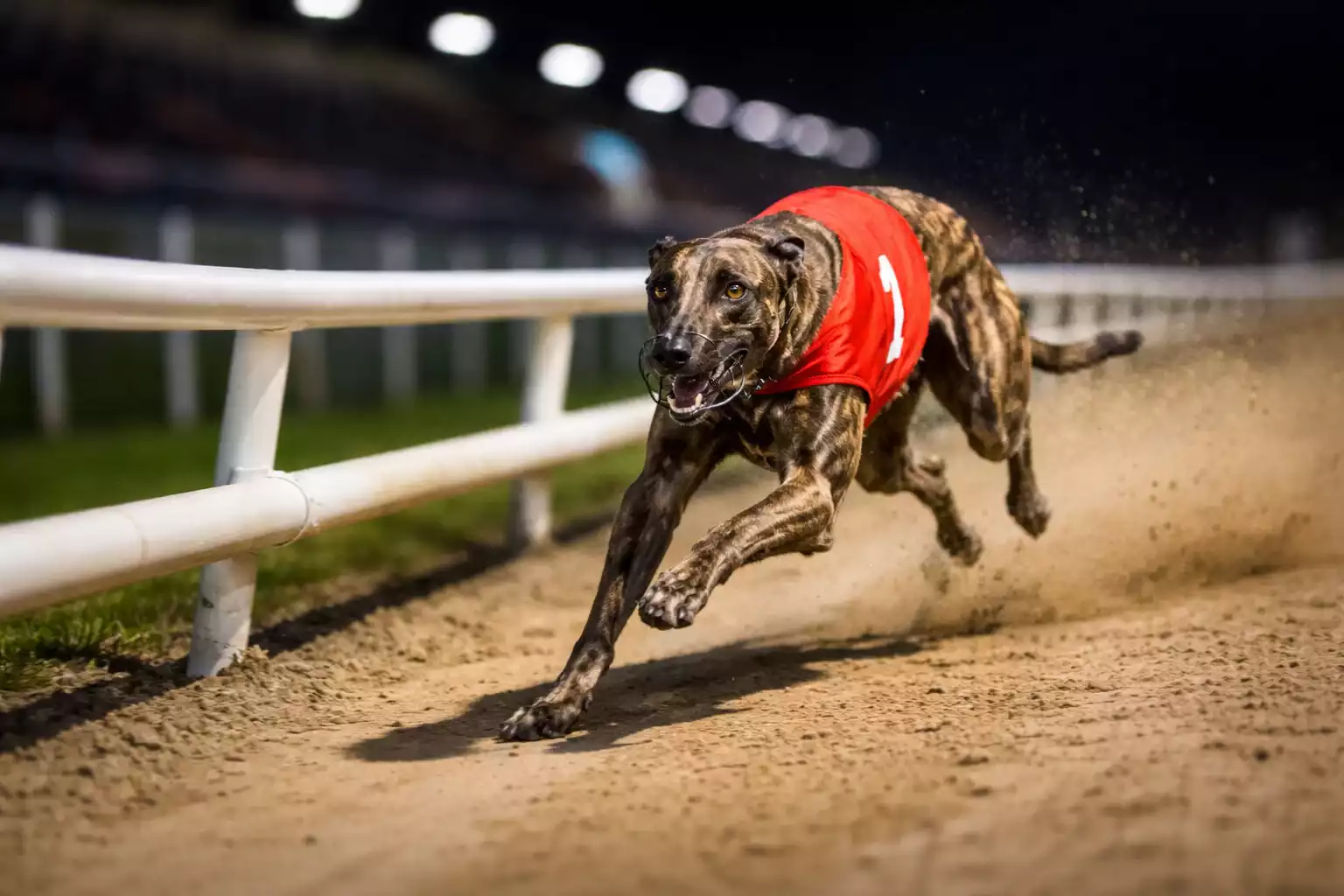
The red jacket carries expectations. Trap 1 sits closest to the rail, the shortest path around any greyhound track. Conventional wisdom says this inside position guarantees advantage. Reality is more complicated. The red jacket doesn’t guarantee the rail.
Trap 1 performance varies dramatically across UK venues. At some tracks, the inside position dominates with win rates approaching 20% or higher. At others, trap 1 barely meets the theoretical 16.6% baseline. Understanding why this variation exists helps punters identify when the red jacket represents genuine value and when it is overrated by markets still clinging to outdated assumptions.
This analysis examines trap 1 statistics across GBGB stadiums, explains the factors that determine whether inside position translates to inside advantage, and identifies conditions where trap 1 dogs may underperform expectations.
The Rail Advantage Theory
The rail advantage theory rests on simple geometry. A greyhound running along the inside rail covers less ground than one running wide. Over two bends, this difference can amount to several lengths. In a sport where races are decided by fractions of seconds, the distance saved theoretically gives trap 1 runners a meaningful edge.
This theory assumes several conditions that do not always hold. First, the trap 1 dog must actually take the rail. Dogs seeded as railers should seek the inside line, but not every dog breaks sharply enough to establish position before the first bend arrives. A slow-breaking railer from trap 1 may find dogs from traps 2 or 3 blocking access to the rail.
Second, the rail must be clear. If multiple railers are drawn in the inside traps, crowding occurs. Dogs fighting for the same running space check each other’s momentum. The geometric advantage disappears when traffic prevents smooth running. A lone railer in trap 1 with middle and wide runners outside enjoys clearer prospects than trap 1 in a race stacked with inside-preferring dogs.
Third, the track configuration must reward rail running. Not all tracks are equal. Bend radius, run distance to the first turn, and surface conditions all affect whether the theoretical rail advantage translates into actual results. Tracks with tight bends amplify the distance differential between inside and outside. Tracks with longer runs to the first bend allow more time for dogs to find their preferred lines, potentially reducing crowding advantages.
Seeding plays a role in trap 1’s effectiveness. Railers—dogs coded R on race cards—receive allocations to traps 1 and 2 specifically because they naturally seek the inside line. When the seeding system works correctly, trap 1 contains a dog suited to exploit its geometric advantage. When mismatches occur, a dog unsuited to inside running may struggle despite the favourable draw.
The rail advantage is real but conditional. It depends on the individual dog’s ability to establish position, the composition of the field, and the characteristics of the track. Treating trap 1 as automatically advantaged ignores factors that determine whether theory matches practice in any given race.
Trap 1 Statistics by Track
Trap 1 win rates vary substantially across the 18 GBGB-licensed stadiums. According to OLBG statistics, the range runs from tracks where trap 1 barely exceeds baseline to venues where the red jacket dominates with win rates around 20%.
Towcester represents the high end of trap 1 performance. The red jacket wins approximately 20% of races here, well above the 16.6% theoretical baseline. The track’s configuration rewards early rail position, with bend geometry that compounds inside advantage. Punters who understand Towcester’s inside bias can identify value when trap 1 dogs are under-bet relative to their structural advantage.
At the extreme, certain race cards have shown trap 1 win rates exceeding 50%. Analysis from the Towcester Racecourse blog documented a meeting at Henlow where trap 1 won 7 of 12 races—a 58% strike rate that reflects both track bias and the specific field compositions on that card. While such extremes are not typical, they illustrate the upper bound of trap 1’s potential advantage when conditions align favourably.
Other tracks show moderate trap 1 advantage. Venues with standard configurations often see trap 1 winning between 17% and 19%, a small but meaningful edge over theoretical probability. These tracks reward inside position without the dramatic bias seen at Towcester.
Some tracks show trap 1 performing at or below baseline. At Harlow, where trap 6 wins 21% of races, the inside traps do not carry the expected advantage. The track’s first bend configuration creates crowding that negates the geometric benefits of inside position. Punters assuming trap 1 advantage at Harlow are working against the venue’s actual patterns.
The variation between tracks makes venue-specific analysis essential. National averages for trap 1 obscure differences that matter for betting. A trap 1 dog at Towcester faces different prospects than the same dog at Harlow. Understanding which tracks favour trap 1 and which do not separates informed punters from those applying generic assumptions that do not reflect local conditions.
When Trap 1 Underperforms
Several factors cause trap 1 to underperform expectations. Recognising these conditions helps punters avoid overvaluing the red jacket when structural advantages are negated.
Slow breaks undermine inside position. A trap 1 dog that exits the box slowly finds other dogs already occupying the space it needs. By the time the railer reaches the first bend, faster-breaking dogs from traps 2 or 3 may have established the rail. The geometric advantage belongs to whoever holds the inside line, not whoever started in the inside trap.
Crowded inside fields create trouble. When multiple railers are drawn in traps 1, 2, and 3, all three dogs target the same running space. Bumping and checking occur as each dog fights for the rail. This interference benefits dogs in wider positions who avoid the congestion entirely. Reading race compositions before betting helps identify when inside crowding may negate trap 1’s expected advantage.
Weather conditions affect trap 1 performance. While wet surfaces often favour inside traps because rail areas drain better, some tracks show different patterns. Surface-specific effects vary by venue, and punters should check going reports rather than assuming rain always helps trap 1.
Track maintenance matters. A rail area that has developed bumps or inconsistencies may force dogs slightly wider than the ideal line. Recent track work can shift bias patterns, making historical trap 1 statistics less reliable until new patterns are established.
At venues with outside bias, trap 1 faces systematic disadvantage. Harlow’s trap 6 advantage means the inside traps underperform despite their theoretical geometric benefits. Assuming trap 1 advantage applies everywhere ignores the documented reality that some tracks favour wide running. Venue-specific knowledge prevents the error of applying generic assumptions to tracks that do not conform to typical patterns.
Key Takeaway
Trap 1’s advantage depends on track configuration, field composition, and individual dog ability. Win rates range from below baseline at venues like Harlow to 20% at Towcester, with extreme cases showing even higher concentrations. The red jacket doesn’t guarantee the rail—it only guarantees the inside starting position.
Effective trap 1 betting requires venue-specific analysis. Understanding which tracks favour inside position, assessing field composition for crowding risks, and evaluating the individual dog’s trapping ability all inform whether trap 1 represents genuine value or overrated tradition. The geometric advantage exists, but realising it depends on conditions that vary from race to race.