Best Greyhound Betting Sites – Bet on Greyhounds in 2026
Loading...
Finishing times get all the attention. When a dog wins in 28.45 seconds over 480 metres, that number headlines the result. But serious punters know that the race is often decided long before the line. The first split—the sectional time to an early marker—reveals how a race unfolds. A dog that leads at the first bend rarely loses, while one that trails early must overcome both distance and traffic.
Sectional times break a race into digestible segments. They expose pace, running style, and trap effectiveness in ways that finishing times alone cannot. The first split reveals what the finish confirms. For anyone looking to understand why trap position matters, sectional analysis is the tool that answers the question with data rather than guesswork.
What Are Sectional Times?
A sectional time measures how long a greyhound takes to cover a specific portion of the track, rather than the entire race distance. UK tracks typically record two key markers: the time to the first bend and the time to the finishing line. Some tracks add intermediate splits at the second or third bend, though these are less consistently published.
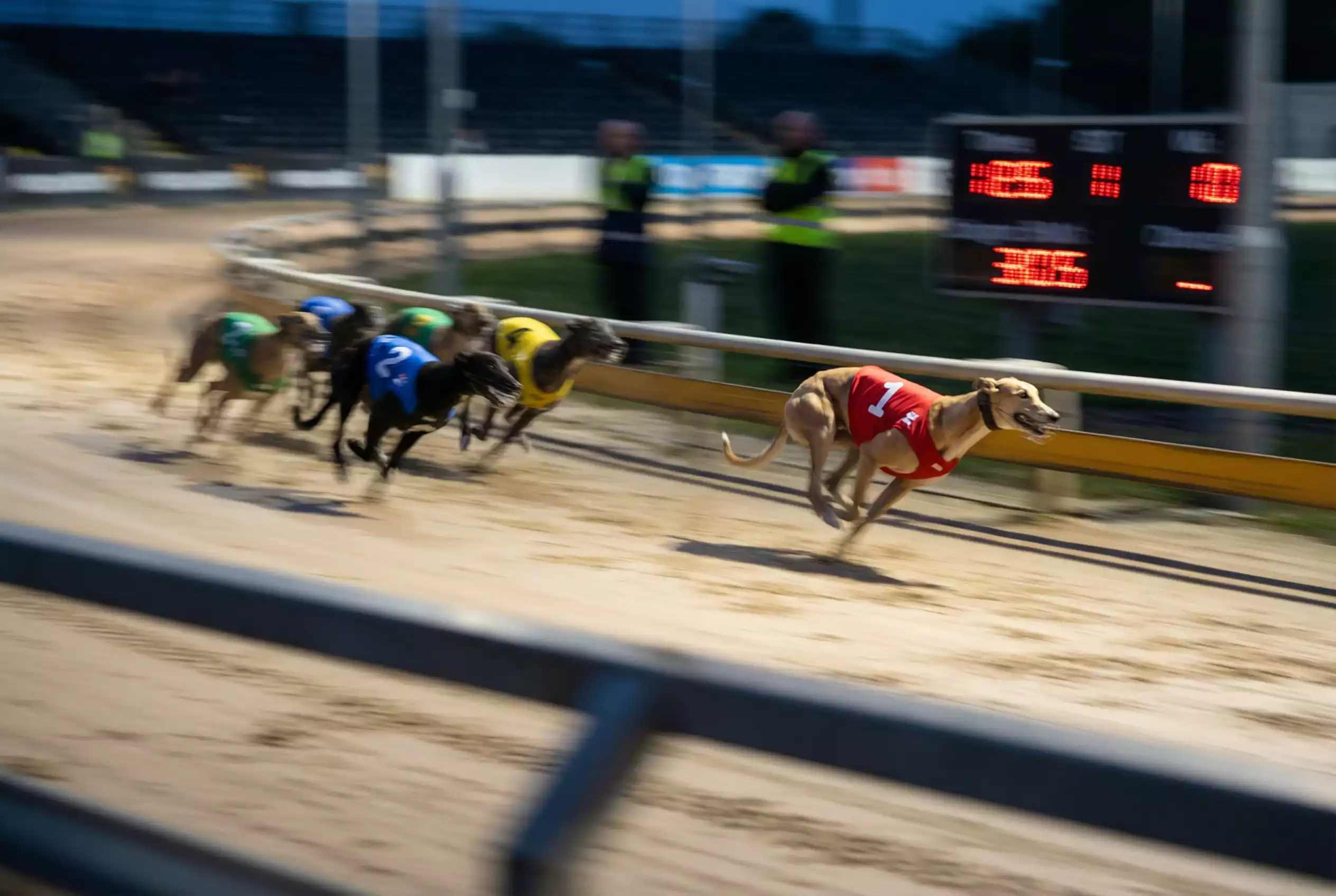
The first-bend sectional is the critical one. It captures the opening phase of the race—the break from the trap, the sprint to the bend, and the battle for position as dogs converge. A fast first split indicates that a dog exited cleanly, found room, and reached the bend near the front. A slow first split suggests trouble: a missed break, interference, or a wide path that cost ground.
Timing equipment at licensed tracks captures these splits automatically. Photo-finish cameras and electronic sensors record each dog’s position at fixed points, generating data that racing managers and punters can analyse. The 355,682 races run in 2024 across GBGB tracks all produced sectional data, building a dataset large enough to reveal patterns that individual observations would miss.
Sectional times differ from calculated times. A calculated time adjusts for going, weight, or other variables to produce a standardised figure. A sectional time is raw: it tells you exactly how long the dog took to reach a marker in that specific race under those specific conditions. Raw data requires interpretation, but it does not lie.
Understanding sectional times means understanding that greyhound racing is not a single contest but a sequence of micro-battles. The dog that wins the first battle—reaching the bend in front—fights the rest of the race from a position of strength.
How Trap Position Affects Early Splits
Trap position directly influences first-bend sectionals because the geometry of the track rewards certain starting points. Trap 1 sits closest to the rail and the bend. A dog breaking cleanly from trap 1 covers the shortest possible distance to reach the first corner. If that dog also possesses early pace, it can establish a clear lead before any rival challenges.
Trap 6 faces the opposite situation. The outside position means more ground to cover, and the angle into the bend forces wide runners to swing outward or risk being squeezed. A trap 6 dog recording a fast first split has either exceptional early speed or benefited from slow breaks elsewhere in the field.
The middle traps—3 and 4—offer a balance. They avoid the immediate rail pressure that trap 1 faces when surrounded by fast-breaking rivals, and they avoid the extra yardage that trap 6 must cover. Dogs drawn in traps 3 and 4 tend to produce more consistent first-bend splits because their path depends less on what neighbours do.
Analysing a dog’s historical first splits by trap reveals running style more accurately than subjective observation. A dog that consistently posts fast splits from trap 2 but slow splits from trap 5 is a confirmed railer—regardless of what the seeding code says. Conversely, a dog with stable splits across all traps is genuinely versatile, a valuable trait that the market often underprices.
Track configuration amplifies these differences. At Romford, where the run to the first bend is notoriously short, trap 1 dogs dominate early pace statistics. At Towcester, with its longer galloping straights, the advantage shifts slightly toward traps that can build momentum without immediate congestion. No single rule applies everywhere. Sectional analysis must account for venue as much as trap.
First-bend crowding creates another pattern visible in sectionals. When multiple fast breakers are drawn adjacent, interference slows them all. A dog from trap 3 posting a surprisingly slow split might have been squeezed between rapid starters from traps 2 and 4. The raw number looks bad; the context explains why. Sectional analysis without race replay review can mislead, but combining both gives a complete picture.
Using Sectionals for Betting
Sectional times translate into betting edges when applied systematically. The basic principle: a dog with consistently fast first splits from a given trap position, drawn into that trap today, is more likely to lead early. Early leaders win disproportionately in greyhound racing because the rail offers the shortest route home and traffic becomes someone else’s problem.
Punters can build a sectional profile for any dog with sufficient race history. Note the first-bend times across its last six to ten runs, recording the trap position for each. If the dog posts splits below 4.20 seconds to the first marker from traps 1-2 but above 4.40 from traps 5-6, the pattern is clear. Back it when drawn inside; oppose it when drawn wide.
Comparative sectionals within a race sharpen the edge. Before any race, estimate which dog is likeliest to lead based on historical first splits from their respective traps. If two dogs with similar profiles are drawn adjacent, expect interference—and look for value elsewhere in the field. If a proven front-runner faces no obvious early challenger, its price may be justified despite short odds.
Sectionals also expose false favourites. A dog with impressive finishing times but slow sectionals likely relies on fast finishes to overhaul tiring leaders. That profile works when the race falls apart but fails when a genuine pace-setter controls from the front. Favourites built on closing speed rather than early pace are vulnerable to trap-drawn rivals with superior breaks.
Key Takeaway
Sectional times offer a window into race dynamics that finishing times obscure. They reveal how trap position shapes early pace, how running style manifests under pressure, and which dogs possess the explosive breaks that greyhound racing rewards. As Tiffany Blackett, Executive Veterinarian at GBGB, has observed: “We are delighted to share the latest progress report on GBGB’s long-term welfare strategy”—a strategy that includes the collection and publication of detailed racing data, including sectionals, to support informed participation. The first split reveals what the finish confirms. Punters who analyse sectionals gain a structural advantage over those who rely on final times alone—because by the time the finish arrives, the race has often already been won at the first bend.