
Introduction
A racing greyhound’s career typically spans three to five years. What happens next has become one of the defining questions for the sport’s future. For decades, the transition from track to home was inconsistent—some dogs found loving families, others faced uncertain fates. Today, the picture looks markedly different. Welfare schemes, rehoming charities, and regulatory oversight have transformed retirement into a structured process with measurable outcomes that the industry publishes annually.
Every racer deserves a soft landing. That principle now underpins official policy across GBGB-licensed racing. The numbers tell a story of significant progress, though challenges remain. Understanding how retirement works—and how successful it has become—offers context for anyone engaged with greyhound racing, whether as a punter, an owner, or simply someone who cares about the dogs. The sport’s credibility increasingly depends on demonstrating that dogs are valued beyond their racing utility.
The safety record behind it is in track conditions and welfare.
Retirement Statistics
The most striking figure in recent GBGB data is the retirement success rate. In 2024, 94% of greyhounds that left licensed racing were successfully rehomed or retained by their owners or trainers. That figure compares to 88% in 2018, representing a six-percentage-point improvement over six years. For a sport that handles thousands of retirements annually, that shift is substantial and represents a genuine change in practice across the industry.
The raw numbers require context. In 2024, fewer dogs entered the racing population than in previous years—5,133 new registrations compared to 6,769 in 2021. A smaller pool means fewer dogs retiring each year, which in turn makes achieving high rehoming rates more manageable. However, the improvement in percentage terms predates the decline in registrations, suggesting that welfare initiatives have driven real change rather than merely benefited from smaller numbers.
Euthanasia for non-medical reasons has collapsed. In 2018, 175 greyhounds were put down for economic reasons—situations where an owner or trainer could not afford veterinary care or could not find a home. By 2024, that number had dropped to just three dogs across the entire licensed industry. The decline is stark and reflects both better funding for welfare schemes and stricter regulatory expectations. Putting a healthy dog down because rehoming is inconvenient is no longer tolerated within licensed racing, and the data proves it.
Injuries remain a separate category. Dogs that suffer catastrophic injuries on the track are sometimes euthanised on veterinary advice. That reality is inseparable from any sport involving physical exertion. However, even injury rates have fallen: the 2024 data shows a 1.07% injury rate across 355,682 runs, the lowest figure on record. Fewer injuries mean fewer dogs retiring prematurely with conditions that complicate rehoming. Track safety investments, better veterinary oversight, and improved kennel standards have all contributed to this decline.
The Greyhound Retirement Scheme
The Greyhound Retirement Scheme, known as GRS, sits at the centre of the official welfare infrastructure. Funded through a combination of industry contributions and voluntary payments from bookmakers, GRS provides financial support to approved rehoming centres and facilitates the placement of retired racers with new owners.
Under the scheme, every greyhound registered with GBGB is covered by a £420 bond. This bond travels with the dog throughout its career and is released to fund its retirement when the time comes. The bond system ensures that retirement costs are anticipated and funded from the start rather than becoming a last-minute burden on trainers or owners.
Adoption rates through GRS-approved centres have grown significantly. According to the GBGB Welfare Strategy Progress Report, adoptions from these centres rose by 37% between January and June 2025 compared to the same period in 2024. That growth reflects both increased public awareness of retired greyhounds as pets and improved marketing of the dogs available through official channels.
GRS works alongside a network of independent charities. Organisations like the Retired Greyhound Trust, Greyhound Rescue, and numerous regional groups operate outside the official scheme but collaborate with trainers and tracks to place dogs. The combined capacity of GRS and independent charities means that, in theory, every retiring greyhound can find a pathway to a new home.
Funding remains a perennial concern. Bookmaker contributions to the sport are voluntary and have declined in real terms over recent years. GBGB and its stakeholders continue to lobby for a statutory levy that would secure long-term funding for welfare programmes. Without such a levy, the industry relies on goodwill and commercial negotiation—a less stable foundation than advocates would prefer.
The wider context is set out in our guide to UK greyhound traps.
Adopting a Retired Racer
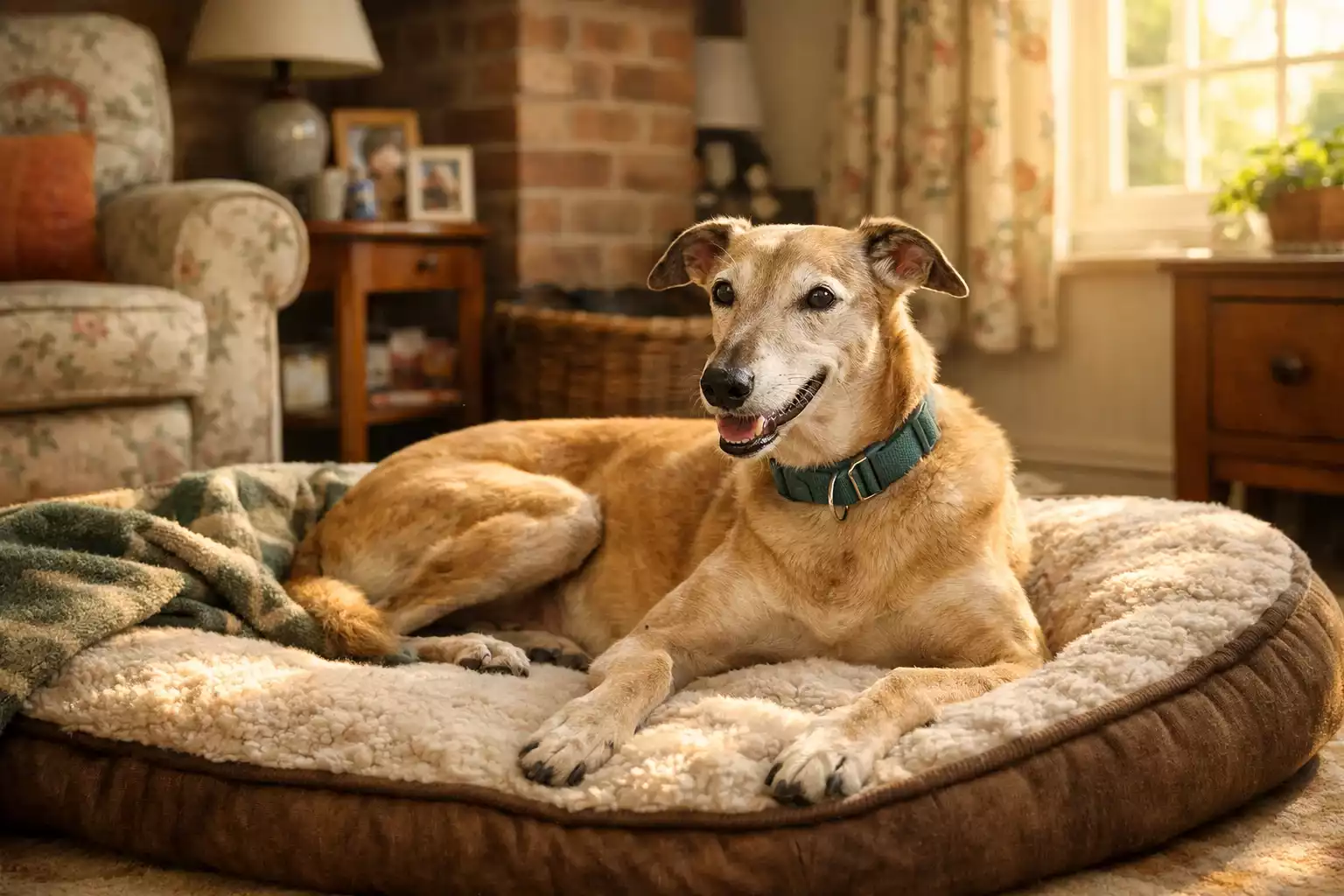
Retired greyhounds make excellent pets, a fact that surprises many people who associate the breed with high-energy racing. In reality, greyhounds are calm, affectionate, and famously lazy indoors. Their nickname—45-mile-per-hour couch potatoes—captures the contrast between their explosive track speed and their preference for sleeping eighteen hours a day on a comfortable sofa. They require less exercise than many smaller breeds and adapt well to flat living.
Prospective adopters typically go through an application process with a rehoming charity or GRS-approved centre. This involves a home check, discussions about the dog’s needs, and matching based on temperament. Greyhounds vary considerably: some are fine with cats and small dogs; others retain a strong prey drive and need a pet-free environment. Responsible rehoming centres assess each dog individually and match them to suitable households, reducing the risk of failed placements.
The transition from kennel to home can take time. Racing greyhounds have often never lived indoors, encountered stairs, or experienced domestic routines. Patience is required during the settling-in period, and new adopters should expect some adjustment as their dog learns the rhythms of home life. However, greyhounds are intelligent and adaptable, and most adjust within a few weeks. Support from the rehoming organisation typically continues beyond adoption, with advice available if challenges arise.
Costs are modest. Adoption fees usually range from £100 to £200, covering vaccinations, neutering, and microchipping. Ongoing costs are comparable to other medium-sized dogs: food, routine veterinary care, and pet insurance. Greyhounds are generally healthy, though some breed-specific conditions—corns on the feet, sensitivity to anaesthesia—require awareness from owners and vets alike. With appropriate care, retired racers typically live to twelve or thirteen years.
Key Takeaway
Greyhound retirement has undergone a transformation. The 94% successful rehoming rate in 2024, the near-elimination of economic euthanasia, and the 37% growth in GRS adoptions all point in the same direction: the sport is taking post-racing welfare seriously. Every racer deserves a soft landing, and the infrastructure to deliver that outcome now exists. As outgoing GBGB Chair Jeremy Cooper noted: “As I step down as Chair this summer, I would like to recognise the contribution of everyone across the sport for helping us achieve this impressive step change which means that racing greyhounds are now receiving the highest levels of care and protection than ever before.” For anyone considering adopting a retired racer, the dogs themselves are the best advertisement—gentle, grateful, and ready for their next chapter.
