
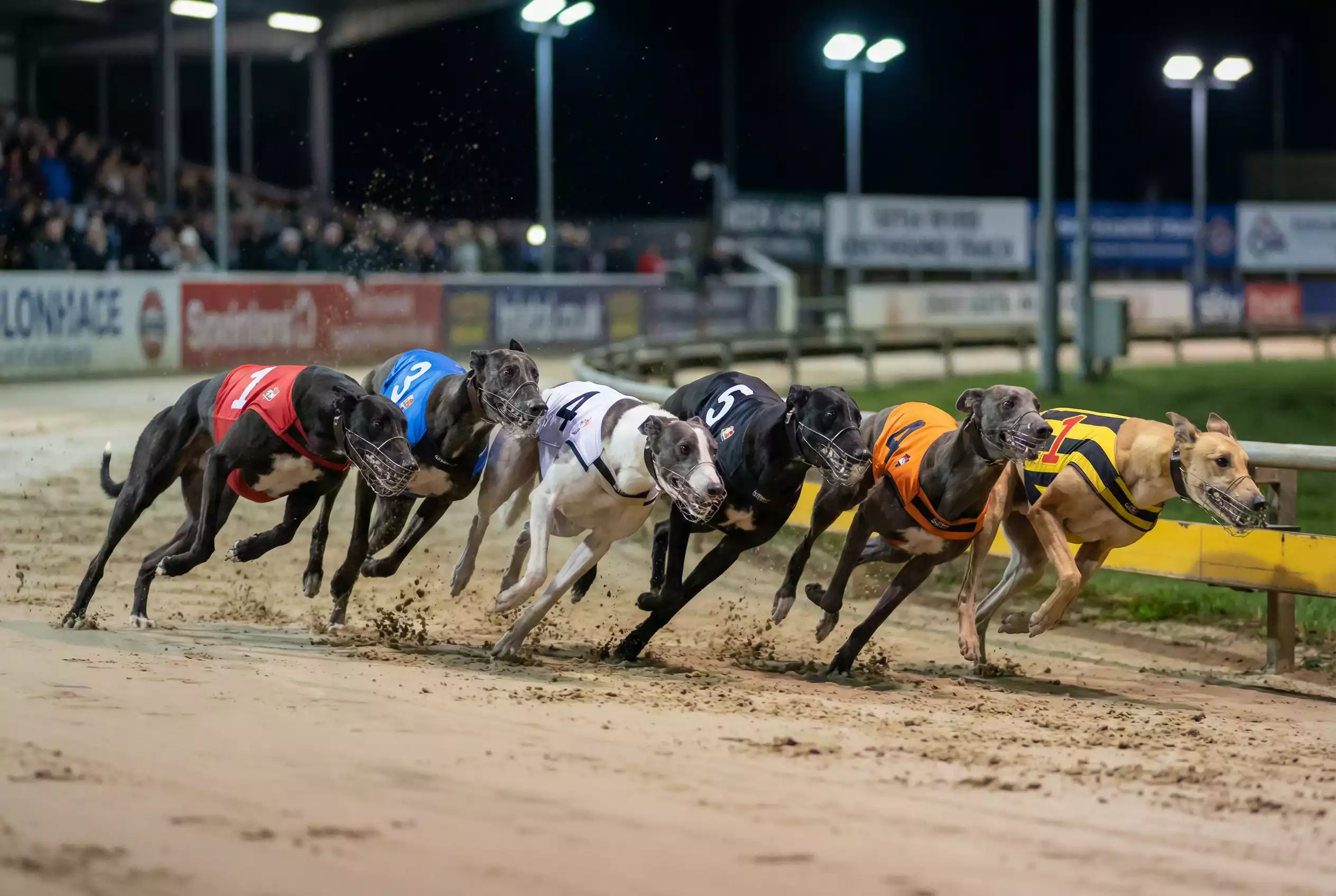
Greyhound racing distances range from sharp sprints of 250 metres to staying marathons exceeding 700 metres. The most common race category—the four-bend trip—falls in the 400-500 metre range, long enough to require stamina and tactical positioning but short enough to reward early pace. This is the bread and butter of UK greyhound racing, the distance around which grading, trap allocation, and betting markets are primarily structured.
More bends, more chances to recover—or to lose. That principle shapes how four-bend races unfold differently from sprints. Dogs have more opportunities to overtake, but also more corners where trouble can strike. Trap position matters at every bend, not just the first. This article examines how standard four-bend distances change trap dynamics and what adjustments punters should make when analysing these races.
Over two bends the draw counts for more: sprint races.
Standard vs Sprint Distances
UK greyhound tracks offer multiple race distances, typically categorised as sprints (two bends, around 250-300m), standard trips (four bends, 400-500m), and staying races (six bends or more, 600m+). The GBGB oversees racing at all licensed tracks, with standard four-bend distances forming the majority of scheduled races.
Sprint races emphasise pure speed and trap break. Two bends mean the race is largely decided by who reaches the first corner in front. Recovery from a poor start is difficult because the finish line arrives quickly. Inside traps dominate sprint statistics across most tracks because they offer the shortest path to the first bend and the fewest opportunities for wide runners to make up ground.
Four-bend races change the equation. The additional corners and distance give trailing dogs chances to close gaps, whether by taking tighter lines on the bends or by out-sustaining early leaders who tire. A dog that breaks fifth from trap 5 might still win a 480m race if it possesses superior stamina and racing intelligence. The same dog would struggle to recover in a 250m sprint.
Staying races amplify these dynamics further. Six bends spread across 600 metres or more transform greyhound racing into an endurance contest. Early pace still matters, but the ability to maintain speed through multiple turns becomes decisive. Stamina, tactical positioning, and luck all play larger roles than in shorter trips.
For punters, understanding these categories is essential. A dog’s sprint form may not translate to standard trips, and its standard-trip form may not predict staying performance. Trap statistics also vary by distance, with inside-trap bias typically strongest in sprints and weakest in marathons. Analysing four-bend races requires attention to factors that barely register over two bends.
How Extra Bends Affect Traps
Each bend in a greyhound race presents both opportunities and risks. Dogs on the inside have less distance to cover but face crowding from rivals seeking the same line. Dogs on the outside have more room but cover extra ground. In four-bend races, these dynamics play out four times, compounding small advantages or disadvantages into meaningful effects by the finish.
The first bend remains the most critical. Early leaders set the pace and establish position; trailing dogs must find paths through or around the pack. But in four-bend races, the second, third, and fourth bends offer additional moments where races can shift. A dog that loses ground at the first bend might recover at the second if leaders bunch up or tire. A dog that leads narrowly at the first bend might extend its advantage if it corners efficiently and maintains momentum.
Trap position influences how dogs approach each bend. A trap 1 railer will seek the inside line through all four corners, saving distance consistently. A trap 6 wide runner will swing outward repeatedly, covering more ground but avoiding the congestion that slows inside runners. Middle runners may adapt their line bend by bend, moving inside when space opens and outside when the rail is blocked.
Stamina interacts with bend navigation. A dog that lacks stamina may run well for the first two bends but fade through the final two, allowing dogs with superior fitness to overtake. This dynamic reduces the importance of early trap advantage. A fast-breaking railer from trap 1 might lead through the first two bends but be caught by a stayer from trap 4 who closes relentlessly through the final corners.
Crowding risk accumulates across bends. Every bend where six dogs converge presents collision potential. In four-bend races, the probability of encountering interference at least once is higher than in sprints simply because there are more opportunities. Dogs that can avoid trouble—whether through clean breaks, smart positioning, or running styles that keep them clear of the pack—gain advantages that compound over the race distance.
Track-specific factors shape how bends affect traps. At tracks with tight bends, inside positions retain strong advantages throughout. At tracks with wider, more gradual bends, outside runners maintain more momentum and the bias is less severe. Punters should study individual track statistics rather than assuming all four-bend races follow identical patterns.
The wider context is set out in our guide to UK greyhound traps.
Strategy Adjustments
Betting four-bend races requires adjustments compared to sprint analysis. First, weigh stamina alongside speed. A dog’s finishing times over four bends indicate whether it maintains pace throughout or fades late. Dogs that post fast times with strong sectionals through the final bends are genuine four-bend performers; those with quick early splits but slow finishes are vulnerable to closers.
Second, assess running style in relation to the field. In four-bend races, fast-finishing wide runners have time to deploy their style. If the early pace is contested among railers who may interfere with each other at the first bend, a wide runner sitting handy in fourth or fifth can sweep through later. This scenario is less viable in sprints, where trailing dogs simply run out of track.
Third, consider trap position as one factor among several rather than the dominant consideration. Inside traps still carry statistical advantages at most tracks, but those advantages shrink over four bends compared to two. A strong dog drawn in trap 5 may overcome the positional disadvantage if it has superior ability and stamina. In sprints, the same dog might have no chance regardless of class.
Fourth, study recovery patterns. Some dogs consistently improve position from the first bend to the finish; others consistently fade. Historical form showing late gains suggests dogs suited to four-bend races where they have time to implement their style. Dogs that never recover from slow breaks may be profitable to oppose over standard trips.
Key Takeaway
Four-bend races form the core of UK greyhound racing, and they demand analytical approaches distinct from sprint assessment. The extra bends dilute inside-trap advantage, create more opportunities for trailing dogs to recover, and elevate stamina as a factor alongside pure speed. As Jeremy Cooper, outgoing GBGB Chair, reflected: “As I step down as Chair this summer, I would like to recognise the contribution of everyone across the sport for helping us achieve this impressive step change which means that racing greyhounds are now receiving the highest levels of care and protection than ever before.” That care extends to the racing itself—ensuring fair competition across all distances. More bends, more chances to recover—or to lose. Punters who adjust their thinking for four-bend races—weighting stamina, running style, and recovery patterns alongside trap position—gain edges over those who apply sprint logic indiscriminately. The standard trip rewards nuanced analysis because every bend changes the race.
