Best Greyhound Betting Sites – Bet on Greyhounds in 2026
Loading...
Introduction
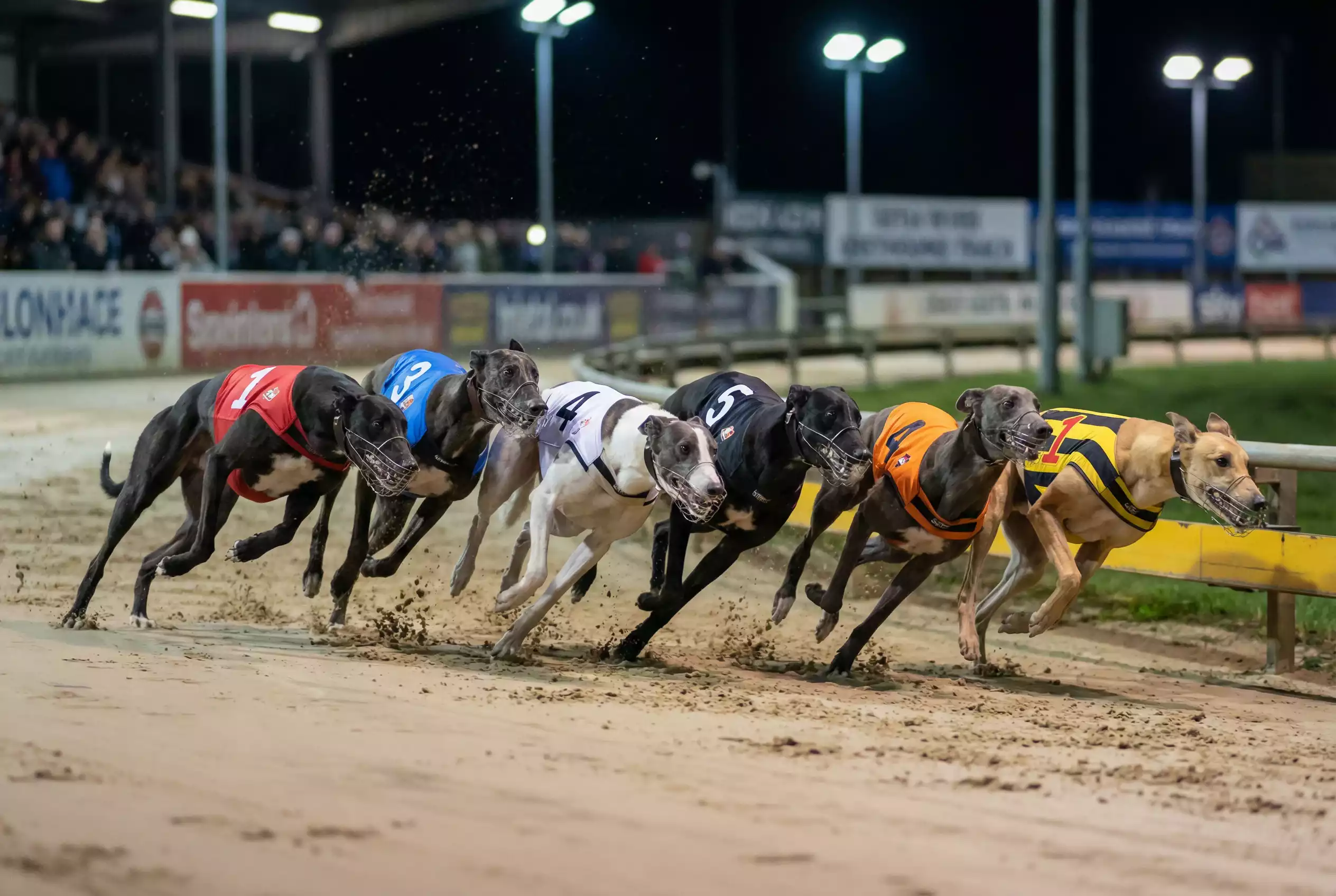
Greyhound races are often decided before the back straight begins. The first bend is where trap position translates into racing reality—or where the best-laid plans fall apart in a tangle of bodies. Six dogs leave the traps simultaneously, all converging on the same piece of track within seconds. How they negotiate that convergence determines the shape of the race.
The race is often won—or lost—before the back straight. That observation underpins serious trap analysis. A dog with superior form and ability can still lose if it encounters trouble at the first bend. Equally, a moderate performer can steal a race by breaking cleanly and finding space where rivals found chaos. Understanding first-bend dynamics adds a layer of sophistication to betting that pure form study cannot provide.
Why the First Bend Matters
The run from the traps to the first bend is typically short—often between 30 and 80 metres depending on the track and the distance of the race. In that brief window, six dogs accelerate from stationary to near top speed while jockeying for position. The inside traps aim to hold the rail; the outside traps aim to clear the pack and use their wide line; the middle traps seek a gap wherever one appears.
Crowding is the central risk. When dogs converge on the same path at the same moment, interference occurs. A bumped shoulder, a clipped heel, a forced check—any of these can cost lengths that are impossible to recover over a 400-metre race. Inside traps face the greatest crowding risk because they attract the most traffic. Railers from Trap 1 and middle runners from Trap 3 often contest the same line, and if neither gives way, both suffer.
The length of the run-up varies by track. At Towcester, the run to the first bend on the 480-metre trip allows dogs time to settle into position before the turn. At other venues, shorter run-ups compress the action and increase the probability of interference. Knowing your track’s geometry is essential when assessing first-bend risk.
First-bend advantage compounds. A dog that leads into the bend often leads out of it, and from there the aerobic demands of greyhound racing favour maintaining position over chasing. The leader sets the pace, controls the line, and forces rivals to spend energy working around. That is why early pace is so valued—and why first-bend trouble is so costly.
Trap Position and Crowding Risk
Each trap carries a different crowding profile. Understanding these profiles helps identify which dogs face the greatest risk and which have the clearest path.
Trap 1: The inside rail offers the shortest route, but the dog must break cleanly and hold its line. If Trap 2 or Trap 3 breaks faster and cuts across, Trap 1 can be squeezed or even knocked sideways. Railers are seeded into Trap 1 because they naturally run tight, but natural preference does not guarantee a clean run. The risk is moderate to high depending on the break speeds of adjacent dogs.
Trap 2: Sits between the rail and the middle. Trap 2 dogs often experience the most unpredictable first bends because they can be attacked from both sides. A fast Trap 1 pushes them out; a fast Trap 3 pushes them in. The result is a buffering role that rarely produces clean leaders but occasionally inherits space when both neighbours find trouble.
Trap 3: The middle position offers flexibility. Dogs here can cut inside if Trap 1 breaks slowly or drift outside if Trap 4 falters. That flexibility is why Trap 3 outperforms at many venues—it has options. However, flexibility does not eliminate crowding. A Trap 3 dog that commits to the inside early can find itself caught between Trap 1 and Trap 2 in a three-way squeeze.
Traps 4, 5, and 6: The outside positions avoid the densest traffic but face their own challenges. Wide runners must cover more ground around the bend, and if the inside clears quickly, the outside dog arrives at the back straight several lengths behind with work to do. The trade-off is clear air at the cost of distance. At venues where the bend geometry allows wide running—Harlow being the obvious example—outside traps can thrive. At venues where the rail offers a decisive advantage, outside traps struggle regardless of crowding outcomes.
Reading Early Pace from Form
Race cards include sectional times and trap-speed ratings that hint at how the first bend will unfold. Learning to interpret these figures can sharpen your first-bend analysis considerably.
Sectional times measure how fast a dog covers specific portions of the track. The first split—often labelled as the time to the first bend—indicates early pace. A dog with a history of fast first splits is a fast breaker; a dog with slower first splits but competitive finishing times is a strong closer. When two fast breakers occupy adjacent traps, expect a battle for position. When a fast breaker occupies Trap 1 and the adjacent traps contain slower starters, expect a clean rail.
Trap-speed ratings aggregate a dog’s performance from each trap over recent races. A dog with high trap speed from Trap 3 but low trap speed from Trap 6 tells you something about its preferences and its ability to exploit position. These ratings are available on most form guides and can be compared directly across the field.
Watch for patterns in the card. If a meeting stacks fast breakers in Traps 1, 2, and 3, anticipate crowded first bends. If the early-pace ratings suggest Trap 6 has the fastest starter while the inside traps are filled with closers, consider whether that wide runner might sweep the bend uncontested. Pattern recognition is the skill that separates casual punters from serious analysts.
Weather affects early pace indirectly. Wet surfaces can slow break times slightly and may alter how dogs commit to their lines. A railer that usually charges the bend may hesitate on slippery going, creating gaps that rivals exploit. Factor conditions into your reading of the form figures.
Key Takeaway
The first bend is where trap position becomes race reality. Inside traps face crowding risk; outside traps sacrifice distance for clear air; middle traps navigate both hazards with flexibility. Reading early pace from sectional times and trap-speed ratings allows you to anticipate how the bend will unfold and identify which dogs are most likely to lead into the back straight. The race is often won—or lost—before the back straight. Build that observation into your analysis, and you will find angles that pure form study misses. As Professor Madeleine Campbell noted when shaping the GBGB welfare strategy, an evidence-based approach produces world-class results—the same applies to betting strategy.