
Introduction
Towcester Greyhound Stadium occupies a unique position in UK racing. Set in the Northamptonshire countryside, it combines the heritage of a racecourse environment with modern greyhound facilities. More importantly for punters, Towcester produces one of the most pronounced trap biases in licensed racing. Understanding this bias is not optional for anyone betting on the track—it shapes every race and every price, and ignoring it guarantees losses over time.
Where the inside rail tells the whole story. That phrase captures Towcester’s essential character. Trap 1 dominates here in a way that few other tracks can match. The geometry of the circuit, the surface characteristics, and the seeding patterns combine to produce a systematic advantage for inside runners that bettors ignore at their peril. Learn the pattern, and Towcester becomes one of the most predictable tracks to bet.
The trap it favours is analysed in trap 1.
Track Layout and Specifications
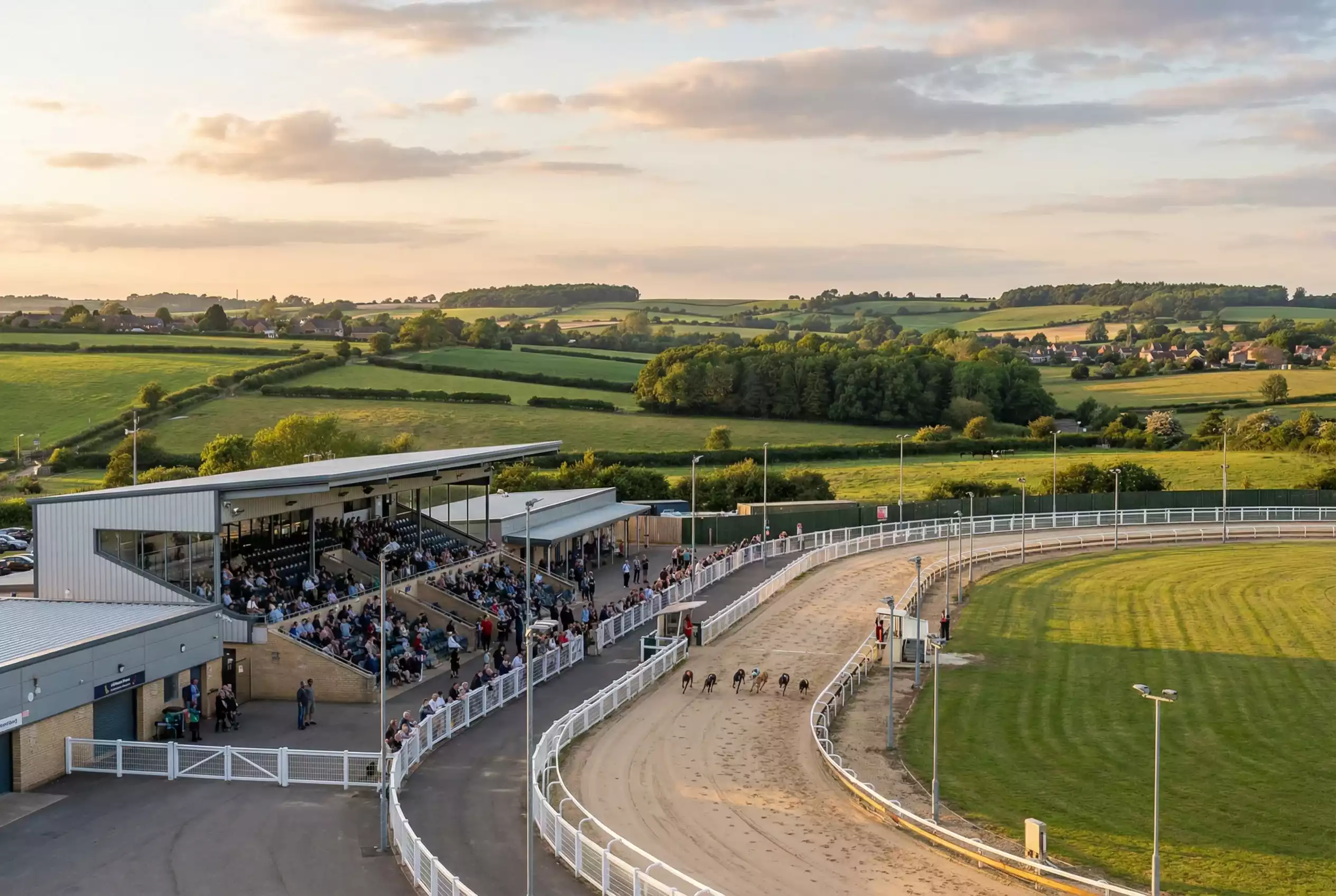
Towcester’s greyhound track sits within the grounds of the historic Towcester Racecourse. The venue’s dual identity as a horse racing and greyhound racing facility creates a distinctive atmosphere, though the two operations run independently. The greyhound circuit is purpose-built for sand-based racing rather than adapted from the horse track.
The track offers racing over multiple distances, with the 480-metre trip being a standard feature. The circumference produces bends that, while not the tightest in UK racing, are sharp enough to punish dogs that run wide. The distance from traps to first bend allows fields to settle before the turn, but the bend geometry itself favours compact lines.
Surface quality is maintained through GBGB’s inspection regime, with regular visits from the Sports Turf Research Institute ensuring consistency. Towcester’s countryside location means it can experience more weather variation than urban tracks, with wet conditions shifting bias even further toward inside traps. Frost is a winter concern, occasionally causing abandonments when temperatures drop.
Facilities serve both local attendees and the broadcast audience. Evening meetings are televised, reaching punters nationally through betting shop screens and online streams. The track’s reputation for inside bias is well known, which means the market prices this pattern efficiently—finding value requires going beyond simply backing Trap 1.
The setting distinguishes Towcester from typical stadium venues. The rural environment produces a different atmosphere from urban tracks like Romford or Monmore, appealing to punters who appreciate the racecourse heritage. Racing feels like an event rather than routine, even on standard weeknight cards.
Trap 1 Dominance: The Data
The numbers at Towcester tell an unambiguous story. Trap 1 posts a win rate of approximately 20%, according to OLBG statistics—roughly four percentage points above the 16.67% theoretical baseline. That margin is substantial. Over a hundred races, Trap 1 wins twenty times instead of the expected seventeen. The edge accumulates.
Why does Trap 1 dominate so decisively? Several factors combine. First, the track geometry rewards rail running. Dogs that break cleanly from Trap 1 and hold their inside line travel the shortest possible distance, saving lengths on every bend. Towcester’s bends amplify this advantage because the camber and surface grip suit tight running.
Second, the seeding system places railers in Trap 1. These are dogs that naturally hug the inside, meaning their style aligns perfectly with their position. A railer in Trap 1 at Towcester is doing exactly what it wants to do, while a wide runner in Trap 6 must fight the track’s fundamental geometry. The seeding reinforces the bias rather than counteracting it.
Third, crowding affects inside traps less at Towcester than at some tracks. The run to the first bend is long enough to allow initial positioning, and the quality of dogs typically drawn inside tends to include fast breakers who establish position early. Interference is always possible, but Towcester’s inside runners face fewer pile-ups than might be expected.
The implication for bettors is clear: respect the inside at Towcester. A Trap 1 draw automatically improves any dog’s prospects. Conversely, a wide draw—particularly Trap 6—should prompt scepticism regardless of form. Dogs that win consistently from outside traps at Towcester are exceptional; most simply cannot overcome the geometry.
Traps 2 and 3 also benefit, though less dramatically. The inside half of the track collectively outperforms the outside half by a margin that matters for betting purposes. Middle runners drawn in Trap 3 can cut inside and exploit the same geometry that favours Trap 1, making Trap 3 a solid secondary position.
The wider context is set out in our guide to UK greyhound traps.
Betting Angles
Towcester’s pronounced bias creates opportunities but also pitfalls. The market knows about the inside advantage, which means Trap 1 dogs are often shorter than their form alone would warrant. Simply backing every Trap 1 runner will not generate profit—the prices already reflect the positional edge. You need to be smarter than the obvious play to find genuine value.
The angle is to identify when the bias is underpriced or overpriced. A Trap 1 dog with mediocre recent form may still offer value if the market has drifted its price too far. Conversely, a Trap 6 dog with excellent form may be overbet by punters who focus on ability and ignore position. Finding the discrepancy between price and true probability is where edge lives. This requires comparing each dog’s price to what you believe its true chance is given both form and trap position.
Weather amplifies the bias. Wet meetings at Towcester push the inside advantage even further, as soft ground on the outside slows wide runners disproportionately. Check the going before betting—rain should increase your confidence in inside selections and decrease your willingness to back outside traps. A Trap 1 dog on a wet night at Towcester enjoys a compounding advantage that can push its true win probability above 25%.
Forecast and tricast markets can offer value. If Trap 1 dominates, building forecasts around 1-2 or 1-3 combinations makes sense. The pool may undervalue these combinations because casual punters spread their bets more evenly. Disciplined combination betting at Towcester can outperform win betting over time, particularly when the favourite occupies an inside trap and the second pick also runs inside.
Avoid backing wide runners unless you have exceptional reasons. A Trap 6 dog at Towcester needs to be significantly superior to its rivals to overcome the geometry. If the form suggests parity, the inside dog will usually prevail. Save your outside bets for tracks where the bias is less severe, and accept that some dogs simply will not win from Trap 6 at this venue regardless of their underlying ability.
Key Takeaway
Towcester offers one of the clearest trap biases in UK greyhound racing. Where the inside rail tells the whole story—Trap 1 wins 20% of races, and inside traps collectively outperform outside traps by a margin that shapes every betting decision. The market prices this bias, so value comes from identifying mispricings rather than blindly backing inside. Wet weather amplifies the pattern; form from wide traps rarely transfers to tight Towcester geometry. Treat Towcester as a track apart, apply its specific rules, and your results will improve.
