
Introduction
Greyhound racing operates outdoors, which means weather is never neutral. Rain softens the track; frost can cancel meetings; heat affects dog performance. For punters who rely on form and statistics, understanding how conditions alter trap dynamics is essential. A bias that holds true on dry sand may invert when the heavens open, turning a confident selection into a losing one.
When the heavens open, the inside tightens. That pattern emerges consistently across UK tracks. Wet surfaces shift the advantage toward inside traps, compressing the effective width of the racing line and punishing dogs who run wide. Knowing why this happens—and how to adjust your analysis—can protect your bankroll when the forecast turns. Weather is not an excuse for losing; it is information to be incorporated into every assessment.
The underlying pattern is track bias.
Rain and Surface Grip
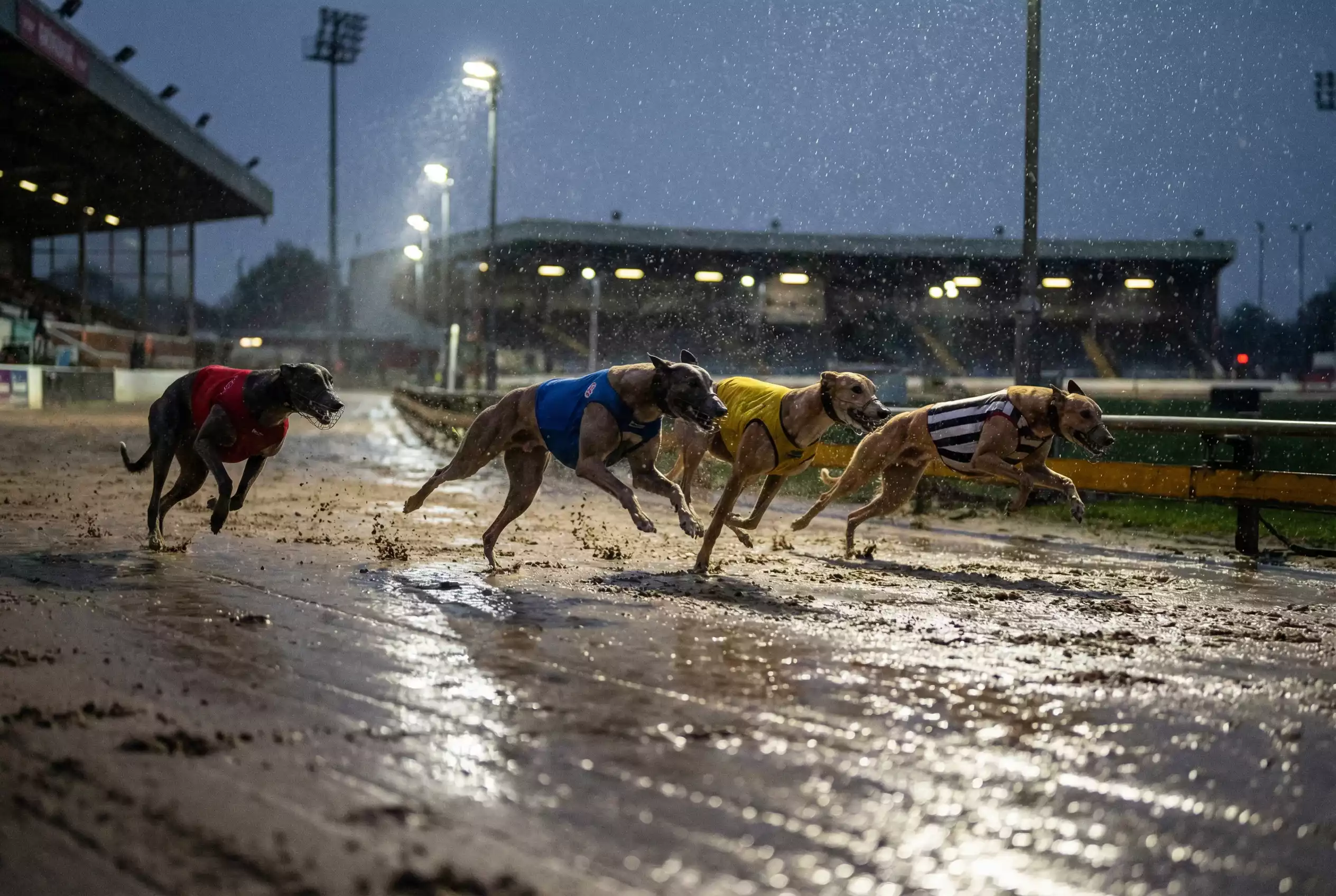
Rain changes the physical properties of the racing surface. UK tracks use sand-based surfaces that drain reasonably well, but heavy or sustained rainfall saturates the top layer and reduces grip. Dogs must work harder to maintain traction, and any loss of footing costs lengths that cannot be recovered in a short race. The margin between winning and losing is often less than a length; a slip at the wrong moment can be decisive.
The effect is not uniform across the track. The inside rail sees more traffic over the course of a meeting, which compacts the sand and can actually improve grip in wet conditions. The outer part of the track, less worn and looser, becomes more treacherous when wet. Dogs running wide must navigate softer, slipperier ground while also covering more distance. The double penalty is severe, and it accumulates across every bend.
Surface maintenance matters. GBGB requires each licensed track to receive four visits annually from the Sports Turf Research Institute for surface monitoring and advice. These visits ensure that tracks are maintained to a consistent standard, but they cannot eliminate the variability introduced by weather. A well-maintained track copes better with rain, but no track is immune to the effects of a downpour. The STRI programme focuses on long-term surface health rather than day-to-day weather response.
Punters should check conditions before betting. Most racecourses publish going reports, and televised meetings often include commentary on track state. A track described as soft or heavy will behave differently from one running fast. Adjusting your assessment accordingly is not optional—it is essential. Ignoring the going is like ignoring form: a fundamental error that costs money.
The severity of the effect depends on the amount and timing of rainfall. Light rain before racing may actually settle dust and produce good conditions. Heavy rain during a meeting progressively worsens the surface. A meeting that starts dry and ends wet can see trap statistics shift race by race as conditions deteriorate. The later races on a wet card often show more pronounced inside bias than the early races.
How Traps 4-6 Are Affected
Outside traps suffer most in wet conditions. Traps 4, 5, and 6 require dogs to run wider lines around bends, covering more ground than inside traps regardless of conditions. When the surface is wet, this extra ground becomes extra punishment. The dogs slide more, lose momentum more easily, and expend more energy compensating for the poor grip.
The statistical impact is measurable. At tracks with marginal inside bias on dry surfaces, wet meetings often see inside traps dominate decisively. Trap 6, which might post a 15% win rate in dry conditions, can drop to single digits when the rain sets in. The wide running style that suits Trap 6 dogs becomes a liability when the outside is slick.
Trap 1 benefits most. The rail provides a reference line, and the compacted sand near the inside offers better grip. Railers seeded into Trap 1 can hold their position with less effort, while rivals attempting to challenge must deal with worse footing. The advantage compounds over multiple bends.
Trap 3, already statistically strong, gains additional edge in wet conditions. Middle runners can cut inside more aggressively when the outside is uninviting, and the shorter route around bends saves energy that matters when everyone is working harder to grip the surface.
For bettors, the implication is clear: discount outside traps when rain is forecast or falling. Even a strong Trap 6 dog with good form deserves a longer look when the going is soft. The form achieved on a fast track may not translate to a wet one.
The wider context is set out in our guide to UK greyhound traps.
Seasonal Patterns
British weather follows seasonal rhythms that affect greyhound racing predictably. Winter brings more rain, shorter days, and the risk of frost. Summer offers drier surfaces and longer evenings. Punters who track performance across seasons can identify patterns that inform their betting and avoid being caught out by predictable changes in conditions.
Autumn and winter meetings are most likely to see wet conditions. Tracks in the north and west of England experience more rainfall than southeastern venues. A midweek evening meeting at Sheffield in November is far more likely to run on soft ground than a Saturday night at Romford in July. Geography matters, and punters who specialise in particular tracks should know their local climate patterns.
Frost poses a different challenge. Unlike rain, which alters trap dynamics, frost can cancel meetings entirely. Tracks cannot race when the surface is frozen, and even near-freezing temperatures may cause abandonment if ice forms overnight. Bettors placing ante-post wagers should consider the weather forecast—there is nothing worse than doing careful form study only for the meeting to be called off. Refunds apply, but the time is lost.
Summer heat can affect dog performance. Greyhounds are athletic animals that generate significant body heat when racing. Very hot conditions may reduce performance, particularly for dogs that carry more weight or have thicker coats. This effect is harder to quantify than rain, but experienced trainers manage their dogs’ schedules accordingly. Some trainers avoid running their dogs in extreme heat, which can cause late withdrawals and change the composition of fields.
The best approach is to treat weather as another variable in your analysis. Check the forecast, review the going report, and adjust your assessment of trap bias accordingly. A track that favours Trap 3 on dry sand may favour Trap 1 in the wet. Knowing which pattern applies today is half the battle. Form study and trap statistics provide the foundation, but conditions on the day determine whether that foundation holds.
Key Takeaway
Weather shifts trap dynamics. Rain softens surfaces, reduces grip on outside lines, and amplifies inside bias. Traps 4-6 suffer most; Traps 1-3 benefit. When the heavens open, the inside tightens—adjust your betting accordingly. Check going reports, monitor forecasts, and treat wet-weather form separately from dry-weather form. The dogs are the same, but the conditions change everything.
