
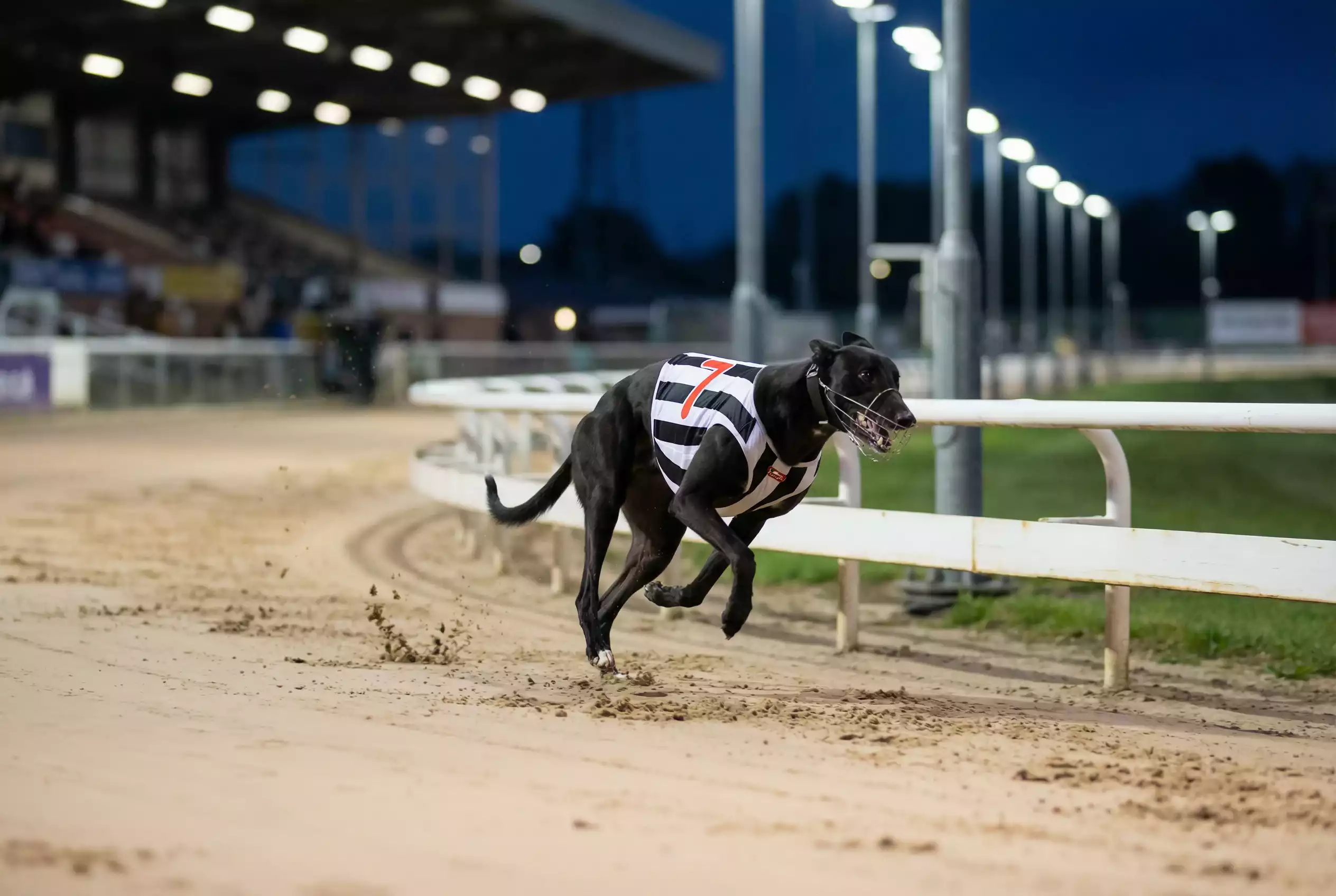
The black and white striped jacket is conventionally considered the worst draw in greyhound racing. Trap 6 sits furthest from the rail, requiring dogs to cover more ground around the bends. Punters often dismiss the stripes before studying the form. The stripes don’t always mean struggle.
At certain venues, trap 6 is not a disadvantage but a genuine advantage. Harlow’s trap 6 wins 21% of races—the highest win rate for any trap at that stadium. Understanding when and why the outside position succeeds helps punters identify value where the market underestimates wide runners based on outdated assumptions.
This analysis explains the wide running style, examines trap 6 statistics across UK tracks, and identifies conditions where the outside position offers structural advantage rather than geometric penalty.
Its strongest track is Harlow.
Wide Running Explained
Wide runners are greyhounds that naturally swing to the outside of the track. They avoid the inside traffic that often develops when multiple dogs seek the rail, instead taking a wider path around the bends. The GBGB seeding system codes these dogs as W and allocates them to traps 5 and 6.
The wide running style involves a trade-off. Dogs running wide cover more distance than those hugging the rail. Over two bends, this extra distance can amount to several lengths. The compensation is clear running: a wide runner avoiding interference maintains momentum while dogs fighting for inside position may check and bump each other.
Trap 6 provides the widest starting position. Dogs breaking from the stripes have no runner to their outside, giving them complete freedom to swing as wide as they prefer. This clear outside path allows wide runners to establish their preferred line immediately, without needing to navigate around other dogs.
Effective wide running requires speed. A slow wide runner covers extra ground without the clear-running benefit that justifies the geometry. The best trap 6 dogs combine sharp trapping with sustained pace through the bends, using their clear running line to maintain speed that inside dogs lose to interference.
Seeding matches running style to trap position. Dogs coded W have demonstrated preference for outside running through previous races and trials. When a wide runner receives trap 6 allocation, the seeding system has placed it in the position most suited to its natural style. Mismatches—dogs coded as middle runners or railers appearing in trap 6—may struggle because the position does not complement their running preferences.
Understanding wide running helps punters assess trap 6 dogs beyond simple geometric calculations. The question is not just how much extra ground the dog covers, but whether clear running compensates for that distance at this specific track.
Trap 6 Statistics
Trap 6 statistics vary dramatically across UK venues. At most tracks, the stripes underperform the 16.6% theoretical baseline, reflecting the geometric penalty of wide running. But exceptions exist, and identifying them creates betting opportunities.
Harlow presents the most striking example. According to OLBG statistics, trap 6 wins 21% of races at this venue—the highest win rate for any trap at Harlow and one of the highest outside-trap rates across UK greyhound racing. The stripes are not a disadvantage here but a genuine advantage.
The Harlow phenomenon reflects track configuration. The venue’s first bend appears to create crowding conditions that disadvantage inside traps. Dogs seeking the rail encounter traffic; dogs swinging wide avoid it. The geometric penalty of wide running is offset by the practical benefit of clear running through congested areas.
Other tracks show trap 6 performing near or above baseline in specific conditions. Venues with short runs to the first bend may see inside crowding develop before positions are established. At these tracks, wide runners bypass the trouble that affects their inside-drawn competitors.
Most tracks, however, show trap 6 underperforming. Venues with pronounced inside bias—like Towcester with its 20% trap 1 rate—see trap 6 struggling against the structural advantages held by inside positions. The geometric penalty compounds at tracks where inside running is rewarded.
Weather affects trap 6 statistics. Wet surfaces often slow the outside running line more than the inside, as drainage patterns typically favour rail areas. When going reports indicate heavy or wet conditions, trap 6 dogs face both geometric and surface disadvantages. Dry conditions at venues with moderate bias offer trap 6 dogs better prospects.
Sample size matters for trap 6 analysis. The position wins less frequently than middle traps, meaning larger samples are needed to establish reliable patterns. Short-term runs of trap 6 success may reflect variance rather than genuine venue advantage. Multi-season data provides more reliable guidance than single-meeting results.
The wider context is set out in our guide to UK greyhound traps.
When Outside Works
Several conditions favour trap 6 dogs. Recognising these conditions helps punters identify when the stripes offer value rather than liability.
Track configuration matters most. At venues where the first bend creates crowding—short run-up distances, tight bends, or rail-line congestion patterns—wide runners avoid trouble that affects inside dogs. Harlow’s trap 6 advantage reflects this dynamic. Identifying similar characteristics at other venues points toward potential trap 6 value.
Field composition affects trap 6 prospects. When multiple railers are drawn inside, crowding becomes likely. The trap 6 dog bypasses this trouble entirely. Reading seeding codes for the entire field reveals when inside congestion may develop, boosting trap 6’s relative chances.
Individual dog quality influences outcomes. A fast wide runner in trap 6 can overcome geometric disadvantage through sustained pace. A slow wide runner cannot. Assessing early sectional times and recent form helps determine whether a specific dog has the speed to make wide running effective.
Dry conditions generally favour trap 6 more than wet conditions. Better footing on the outside line allows wide runners to maintain speed through the bends. When going reports indicate firm surfaces, trap 6 dogs face fewer compounding disadvantages.
Sprint races present different dynamics than standard distances. Over shorter races, the geometric penalty has less time to accumulate, but there is also less time for trouble to develop on the inside. The net effect varies by venue, and punters should examine trap 6 statistics separately for sprint and standard distances at tracks they follow.
Markets often undervalue trap 6 based on generic assumptions. When conditions favour wide running at a specific venue, the stripes may offer value that reflexive dismissal overlooks. Informed punters can identify these opportunities while others assume outside always means disadvantage. GBGB CEO Mark Bird has emphasised the sport’s evidence-based approach: “It is heartening that the British Government continues to take an evidence-based view of licensed greyhound racing in Britain.” That evidence-based approach applies equally to trap analysis—the data shows trap 6 succeeds at specific venues regardless of traditional assumptions.
Key Takeaway
Trap 6 is not universally disadvantaged. While the stripes underperform at most UK venues, exceptions like Harlow’s 21% trap 6 win rate demonstrate that wide running can succeed when track configuration creates inside congestion. The stripes don’t always mean struggle—they sometimes mean clear running while others fight for position.
Effective trap 6 betting requires venue-specific knowledge. Understanding which tracks favour wide running, assessing field composition for crowding risks, and evaluating individual dogs’ speed determines whether trap 6 offers value or liability. The geometric penalty is real, but clear-running advantages can offset it at the right venue with the right dog.
