
Not all traps are created equal. At every UK greyhound track, certain starting positions produce more winners than probability alone would predict. This systematic deviation—track bias—reflects how each venue’s physical characteristics interact with the mechanics of greyhound racing. Understanding why these biases exist transforms them from statistical curiosities into actionable handicapping tools.
Every track tells its own story through the numbers. Towcester’s trap 1 wins at 20%, well above the theoretical 16.67%. Harlow’s trap 6 hits 21%, the highest outside-trap win rate in British racing. These patterns persist across years, across different dog populations, across changes in training methods. They reflect permanent features of track design that punters can exploit.
Track bias emerges from the intersection of geometry, surface, and racing dynamics. The distance from boxes to first bend, the radius of turns, the quality of running lines, the drainage characteristics that determine how weather affects the going—all contribute to patterns that favour some traps over others. Dogs don’t race on abstract tracks; they race on specific surfaces with specific configurations.
This analysis examines the factors that create track bias, from the fundamental rail advantage to the effects of weather and maintenance. Case studies of tracks with pronounced biases illustrate how these factors combine in practice. Whether you specialise in one venue or follow multiple tracks, recognising bias helps you understand why the numbers look the way they do—and how to use that understanding.
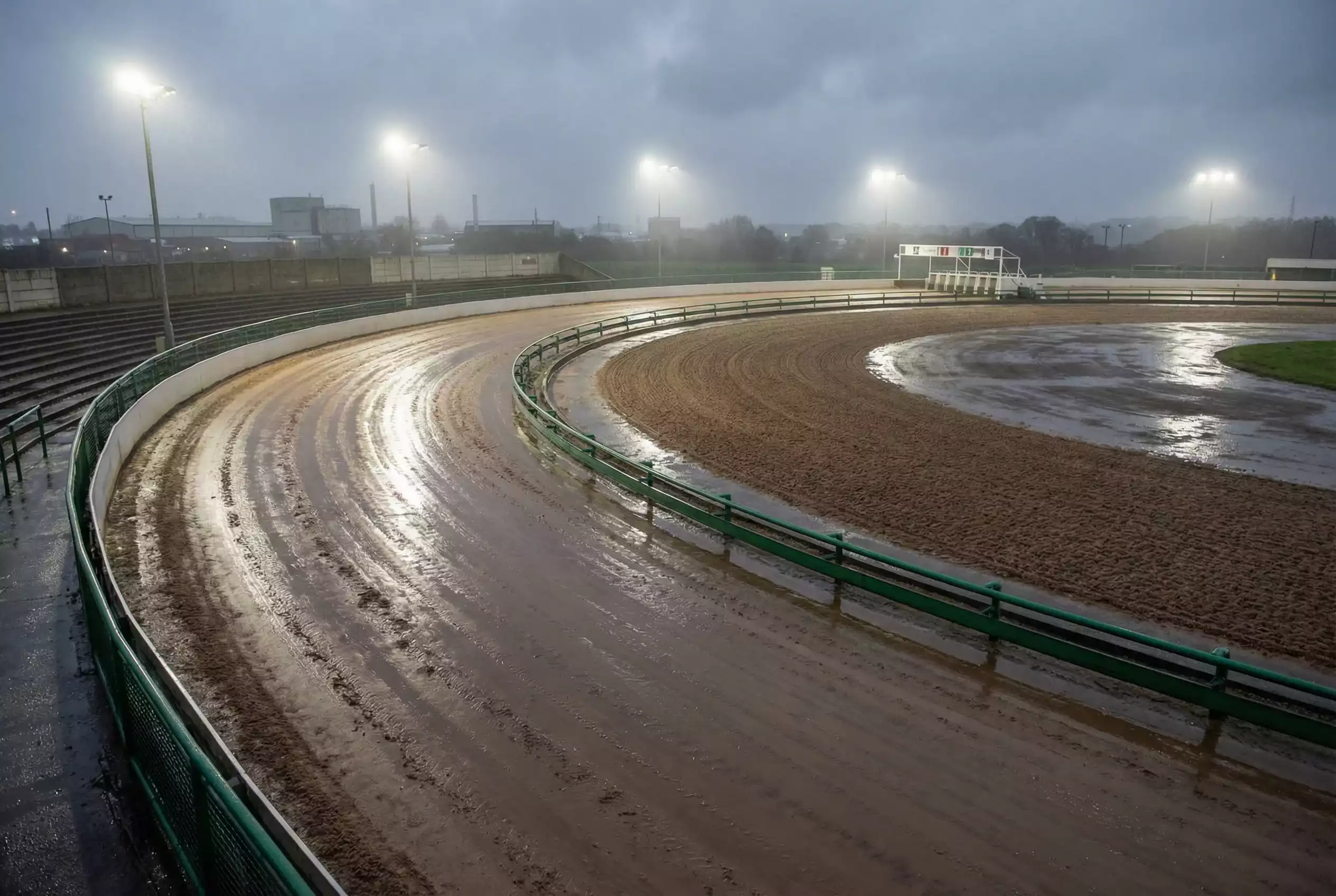
Weather is one of its drivers: rain and track conditions.
What Is Track Bias?
Track bias is the systematic tendency for certain traps to outperform or underperform their expected win rate at a specific venue. In a theoretically fair race, each of the six traps would win 16.67% of the time over a large sample. When a trap consistently wins at 20% or falls to 13%, something in the track’s characteristics is tilting the odds.
Bias is structural, not random. Random variation in trap win rates occurs over small samples—a trap winning four races in one evening, or failing to produce a winner for a week. Bias manifests over thousands of races, persisting across seasons and dog populations. When Harlow’s trap 6 wins at 21% year after year, that pattern reflects how the track is built, not which dogs happened to race there.
The distinction matters for betting. Random variation averages out; structural bias does not. A punter who identifies genuine bias can incorporate it into selections with confidence that the pattern will persist. A punter chasing short-term trap trends—which are mostly noise—will find those patterns reversing unpredictably.
Track bias interacts with seeding. Dogs are allocated to traps based on running style, so the win rate of any trap reflects both the trap’s inherent characteristics and the dogs typically assigned to it. A trap that accommodates railers will show the combined effect of inside-line advantages and the quality of dogs seeded as railers. Disentangling these contributions requires careful analysis, but for betting purposes, the combined effect is what matters.
Not all tracks show strong bias. Some venues produce trap statistics that cluster near the expected 16.67%, indicating balanced geometry and running conditions. At these tracks, trap position contributes less to outcomes; form and grading matter more. Recognising which tracks show bias—and which don’t—helps punters allocate attention appropriately.
Measuring bias requires sufficient data. Individual race cards produce too few results to distinguish signal from noise; a trap winning three of six races on one evening tells you nothing reliable about underlying bias. Annual statistics across thousands of races reveal genuine patterns. When interpreting trap data, always consider whether the sample size supports confident conclusions. Tracks running fewer meetings produce noisier statistics than high-volume venues.
The Inside Rail Advantage
The rail represents the shortest path around any oval track. A dog running the rail covers less distance than one racing wide, and in a sport where races are often decided by fractions of a length, that distance saving translates directly into competitive advantage. Inside traps—particularly trap 1—provide the most direct access to the rail.
According to data from OLBG’s 2025 statistics, Towcester’s trap 1 wins at approximately 20%, demonstrating pronounced inside bias. The track’s configuration amplifies the rail advantage: a relatively short run to the first bend allows clean-breaking railers to establish position before interference develops. Once on the rail, these dogs can maintain their line through both turns, covering the minimum distance while rivals navigate wider paths.
The rail advantage compounds through the race. Each bend where a dog holds the rail saves distance compared to running wide. Over four bends in a standard race, a dog on the rail might save several lengths compared to one running two or three paths wide. This cumulative saving explains why inside bias tends to be stronger than outside bias—the rail is always the shortest line, while the advantage of running wide (avoiding interference) depends on whether interference actually occurs.
Inside bias is not universal. Some tracks show weaker or absent rail advantages due to geometric factors that limit inside benefits. Tracks with longer runs to the first bend give dogs more time to sort themselves out before the turn, reducing the importance of immediate rail access. Tracks with tighter bends create crowding that punishes inside runners who can’t escape traffic. The rail is always the shortest path, but accessing it cleanly varies by venue.
Weather moderates the rail advantage. Wet conditions deteriorate the inside running line first as water drains towards the rail. Dogs committed to the rail on heavy going may find slower footing than those running slightly wider. This effect can temporarily neutralise or reverse inside bias, making seasonal analysis important for tracks where weather significantly affects surfaces.
Punters betting on inside-biased tracks should distinguish between trap statistics and real-time conditions. The annual numbers show the general pattern; today’s going determines whether that pattern holds. A track showing strong inside bias on dry going might produce very different results after heavy rain. Checking going reports before betting provides context that historical statistics alone cannot supply.
Bend Distance and Configuration
The run from starting boxes to the first bend determines how much trap position matters. Short runs give dogs less time to establish position before the turn, amplifying the importance of breaking cleanly from a favourable draw. Long runs allow the field to sort itself out, reducing the impact of starting position as dogs find their preferred racing lines before the first turn.
Track circumference affects bend configuration. Larger tracks produce gentler bends that dogs can navigate at higher speeds with less crowding. Smaller tracks create tighter turns where multiple dogs converging on the same racing line generates interference. The radius of each bend determines how much distance wide runners lose compared to railers—and how much risk inside runners face from competitors pushing them towards the rail.
According to analysis from Towcester Racecourse, some venues like Henlow historically featured three turns rather than the standard two, creating unique bias patterns. Additional bends multiply the distance-saving benefits of inside running while increasing opportunities for interference. Tracks with non-standard configurations require separate analysis; statistics from conventional two-bend tracks don’t transfer.
The first bend usually decides races. Dogs establishing favourable positions by the first turn rarely surrender that advantage. The field strings out as faster dogs pull clear and slower dogs settle into trailing positions. What happens at the first bend determines running order for the remainder of the race. Trap bias, to a large extent, reflects how each position facilitates access to favourable first-bend positioning.
Bend camber—the banking of turns—affects how dogs negotiate corners. Steeper cambers help dogs maintain speed through bends but create drainage patterns that may favour certain running lines. Flatter cambers slow the field more uniformly but produce different wear patterns on the surface. Track engineers balance these considerations when designing and maintaining surfaces, and their choices show up in trap statistics.
Distance interacts with bend configuration. Sprint races feature fewer bends, reducing the cumulative rail advantage and making early pace relatively more important. Standard four-bend races amplify bias because dogs have more opportunities to save ground on the inside or lose it running wide. Marathon distances magnify these effects further. Trap statistics aggregated across all distances at a venue obscure these distance-specific patterns; disaggregated data reveals different biases for different race types.
Punters specialising in particular race distances should analyse trap performance separately for their focus. A track that shows strong inside bias on standard trips might show no bias on sprints, or different bias on longer races. The overall figures provide orientation, but distance-specific analysis supports more precise selections.
Weather and Surface Conditions
Weather transforms track bias. The same venue that favours inside traps on dry summer evenings may produce different patterns on wet winter cards. Understanding how conditions affect surfaces—and how surface changes affect trap performance—adds a dynamic layer to static statistical analysis.
Rain affects different parts of the track differently. Water drains towards the inside rail, creating heavier going along the rail while wider running lines remain comparatively firmer. Dogs committed to the rail may find themselves slogging through deteriorated surfaces while rivals running slightly wider enjoy better footing. This effect moderates or reverses inside bias during and after rainfall.
Temperature affects surface characteristics. Cold conditions produce firmer going as moisture in the track surface freezes or consolidates. Warm conditions, particularly after rain, can produce softer going that tires dogs differently depending on their running style. Stamina-oriented dogs may handle soft going better than pure speed specialists, changing which dogs benefit from which traps.
Wind rarely affects trap bias directly but can influence race dynamics. Strong headwinds on the home straight may favour dogs who conserve energy early; strong tailwinds may reward front-runners who can extend leads in the final stages. These effects interact with trap position indirectly, through their impact on pace scenarios rather than track geometry.
Seasonal patterns aggregate weather effects. Winter racing generally produces conditions that favour inside traps—deteriorated outside lines from accumulated wet-weather racing, shorter daylight hours that limit track recovery time, and going that suits railers over wide runners. Summer racing opens up outside lines, producing more balanced or even outside-favourable conditions. Annual trap statistics blend these seasonal variations into single figures that may obscure substantial within-year changes.
Going reports provide real-time information about surface conditions. Racing managers assess the track before each meeting and publish going descriptions—terms like “standard,” “slow,” or “heavy”—that indicate how conditions compare to normal. Punters can use these reports to adjust their view of trap bias for the current card, downgrading inside traps when going reports indicate rail deterioration.
Track recovery between meetings affects how weather effects persist. Venues with quick turnarounds between race cards may show cumulative surface deterioration that worsens through a wet week. Tracks with longer recovery periods can restore surfaces more fully between meetings, limiting weather-related bias shifts. Understanding each track’s racing calendar helps predict when weather effects will accumulate.
Track Maintenance and Safety
Track maintenance directly affects bias patterns. Well-maintained surfaces produce more consistent running conditions across all lines; poorly maintained surfaces develop irregularities that favour some positions over others. The GBGB’s investment in track safety has standardised maintenance practices across licensed venues, with implications for how bias patterns evolve.
The Sports Turf Research Institute conducts four visits per track annually—double the frequency from 2022—to assess surface quality, drainage, and safety. These inspections identify areas requiring attention and ensure compliance with standards. According to the GBGB’s welfare strategy documentation, this enhanced oversight reflects the organisation’s commitment to greyhound welfare through improved track conditions.
Professor Madeleine Campbell, involved in developing the GBGB’s welfare strategy, noted: “In leading the development of the GBGB Strategy, I spoke to academics, specialists, vets, global experts in animal welfare and a wide range of stakeholders to ensure that what we have put in place is world class in its approach to the welfare of greyhounds.” Track maintenance forms part of this comprehensive approach.
The Track Safety Committee Fund allocated £168,000 in 2024 to support safety improvements across venues. This funding enables tracks to address issues identified during STRI visits, from drainage upgrades to surface replacement. As track quality converges across the licensed circuit, historical bias patterns may moderate as poorly maintained venues catch up to better-resourced counterparts.
Running rail maintenance affects inside bias. Rails that shift or develop gaps create hazards for dogs running the inside line. Properly maintained rails provide a consistent reference point that railers can follow safely. When rail issues develop, racing managers may take preventive action that reduces inside traffic, temporarily affecting trap statistics until repairs are completed.
For punters, maintenance schedules provide information about when bias patterns might shift. Tracks that resurface between seasons may show different bias in the first months of the new surface compared to established patterns. Major maintenance work—new drainage, rail replacement, surface upgrades—can reset the baseline. Checking track announcements about recent or planned maintenance helps anticipate when historical statistics become less reliable.
Case Studies: Tracks with Notable Bias
Harlow provides the clearest example of outside bias in UK greyhound racing. Trap 6 wins at 21%, approximately five percentage points above the national average for that position. This pattern has persisted across multiple years, indicating structural features of the track rather than random variation in dog quality.
Harlow’s geometry favours wide runners. The run to the first bend is configured to allow dogs breaking from trap 6 to maintain their line without losing prohibitive ground. The first bend itself opens sufficiently for outside runners to hold position without being pushed wider. Dogs seeded as wide runners and drawn into trap 6 at Harlow benefit from a venue that plays to their natural running style.
Towcester demonstrates the opposite pattern. Trap 1 wins at approximately 20%, showing strong inside bias. The track’s shorter run to the first bend rewards dogs that break cleanly and establish rail position immediately. Once on the rail, these dogs can maintain their advantage through both turns, covering the shortest possible distance while rivals navigate wider paths.
The contrast between Harlow and Towcester illustrates how track design creates different competitive environments. The same dog might excel at one venue and struggle at the other, depending on whether its running style aligns with the track’s bias. Punters who follow dogs across multiple venues must adjust their assessments based on where the race is taking place.
Romford shows trap 3 dominance rather than inside or outside bias. Historical data includes periods where trap 3 at Romford won 28 of 98 races—a 28.5% success rate—demonstrating how middle positions can outperform at certain venues. Romford’s racing office seeds flexible middle runners to trap 3, and the track’s geometry allows these dogs to exploit whatever racing room develops at the first bend.
The Valley recorded the highest favourite win rate of any UK track in 2024 at 42%. High favourite success rates create conditions where trap bias expresses itself more cleanly. When races generally go to form, the underlying factors that predict outcomes—including trap position—show their effects more reliably. The Valley’s predictability makes it a useful venue for testing trap-based approaches.
Kinsley represents the opposite extreme, with the lowest favourite win rate at 31.60%. This unpredictability makes trap bias harder to exploit. When race outcomes are fundamentally less predictable, any single factor—including trap position—carries less weight. Punters at Kinsley may find form and grading analysis more productive than trap-based systems.
Monmore Green and similar Midlands tracks produce more balanced trap distributions. Their geometries don’t strongly favour inside or outside positions, leading to win rates that cluster near the expected 16.67%. At balanced venues, trap position becomes one factor among many rather than a dominant consideration. These tracks reward comprehensive handicapping over single-factor approaches.
Sheffield, before its 2023 closure, showed pronounced seasonal variation in trap bias. Winter racing produced stronger inside bias as wet weather deteriorated outside running lines. Summer racing moderated this pattern. The closure removed this venue from the circuit, but similar seasonal effects occur at other tracks where weather significantly affects surfaces.
Crayford, which closed in January 2025, was the UK’s last track offering hurdle racing alongside flat events. Its flat-race statistics showed moderate inside bias consistent with its track dimensions. The hurdle races operated under different dynamics where jumping ability mattered more than trap position. Its closure ends a unique data point, though the flat-race patterns it exhibited remain relevant for understanding how similar track configurations produce bias.
Dunstall Park, which opened in September 2025, represents the opposite case—a new venue with no historical statistics. Early-season results at new tracks are unreliable as dogs and trainers learn the venue and the racing office establishes seeding patterns. Any trap statistics from Dunstall Park’s first year should be treated as provisional until a full racing calendar establishes what patterns the track will produce going forward.
The full picture is in our guide to UK greyhound traps.
Key Takeaway
Track bias reflects how each venue’s geometry, surface, and maintenance practices interact with racing dynamics. Inside traps benefit from the rail advantage—the shortest path around the track—while outside traps escape interference at the cost of additional distance. The balance between these effects varies by venue, creating patterns like Towcester’s 20% trap 1 win rate and Harlow’s 21% trap 6 performance.
Weather moderates bias by affecting surface conditions differently across running lines. Rain deteriorates inside lines first; dry conditions favour balance or outside running. GBGB’s enhanced maintenance standards, including four annual STRI visits per track and the £168,000 Track Safety Committee Fund, are standardising surface quality across venues, which may gradually moderate historical bias patterns.
Every track tells its own story through the numbers. Reading that story requires understanding why the patterns exist, not just what they are. Geometry, weather, maintenance, and seasonal effects all contribute. Punters who grasp these factors can distinguish genuine bias from noise and apply that understanding to sharper selections.
