
Introduction
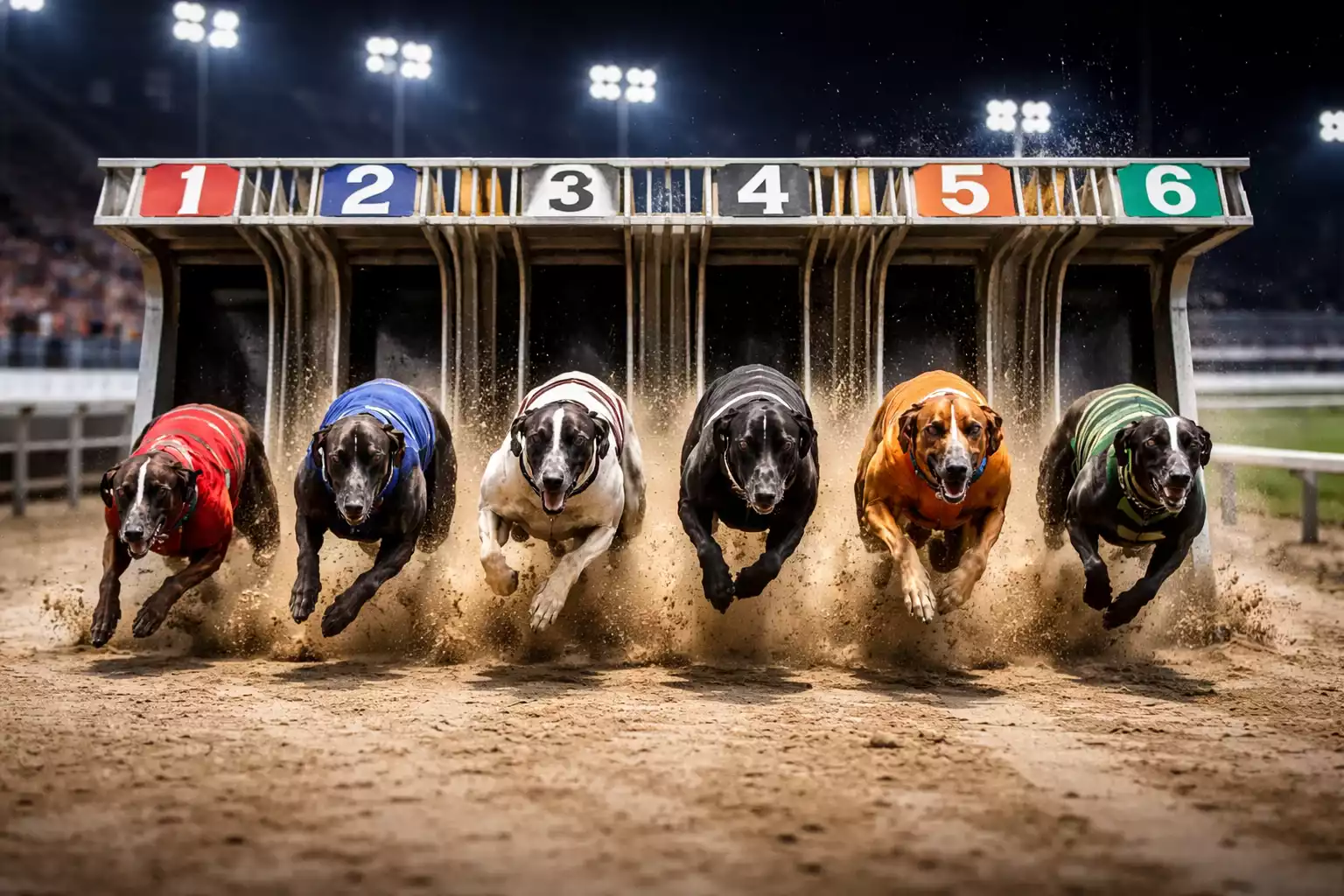
Sprint races strip greyhound racing to its purest form: raw speed over minimal distance. At 250 to 300 metres, these two-bend contests leave almost no room for error. The trap opens, and within fifteen seconds the race is decided. For punters, sprints demand a different analytical approach—one where early pace and trap position carry far more weight than stamina or tactical nous. Everything happens faster, and mistakes are punished more severely.
In sprints, the start is everything. A slow break in a four-bend race can sometimes be recovered through stamina and racing intelligence. In a two-bend dash, there is simply no time. The dog that reaches the first bend in front usually stays in front. That reality makes trap statistics even more consequential than they are over longer trips, and it rewards bettors who understand how sprint dynamics differ from standard racing. Ignore the differences, and you will find yourself backing dogs whose strengths are irrelevant to the distance they are running.
Longer trips dilute it: four-bend races.
Why Sprints Are Different
The fundamental difference is time. A standard 400-metre race lasts roughly 24 to 26 seconds; a 480-metre event can stretch beyond 29 seconds. A 250-metre sprint, by contrast, is over in around 14 to 15 seconds. That compressed timeframe changes the relative importance of every phase of the race. What matters in a four-bend race may be almost irrelevant in a sprint, and what can be ignored over standard distances becomes critical over two bends.
In longer races, the first bend matters, but dogs have three more bends and a back straight to make up ground. A railer squeezed at the first turn might find space on the second or third. A wide runner who loses lengths sweeping the opening bend might close through superior stamina down the home straight. Sprints offer no such luxury. Two bends and a short run-in leave no margin for positional recovery. The race is effectively decided by the time the field exits the second turn.
Trap speed becomes the dominant variable. Trap speed measures how quickly a dog breaks from its box and reaches racing pace. In four-bend races, a dog with moderate trap speed but excellent sectional times through the middle of the race can still compete. In sprints, moderate trap speed typically means trailing the field before the first bend is even reached. The correlation between trap speed and finishing position tightens dramatically as distance shrinks.
Fitness and stamina, by contrast, diminish in importance. A sprint is an anaerobic effort—explosive power over a short burst. The aerobic capacity that separates stayers from speedsters barely enters the equation. What matters is acceleration and the ability to hold top speed for fifteen seconds. Dogs that excel over longer trips may struggle in sprints, and vice versa. Distance specialists exist at both ends of the spectrum.
Trap Position in Short Races
Inside traps gain an amplified advantage in sprint racing. The logic is straightforward: with only two bends and minimal distance to cover, the shorter route around each turn becomes proportionally more valuable. A dog in Trap 1 that holds the rail negotiates two clean bends while outside runners travel further on both. Over 400 metres, that extra distance might cost half a length per bend. Over 250 metres, the same geometry costs the same distance—but represents a larger share of the total race.
Track bias, already significant in standard races, becomes even more pronounced in sprints. At venues like Towcester, where the rail advantage is well documented, sprint races can see inside traps dominate with win rates pushing toward 25% or higher. Outside traps struggle not because the dogs lack ability, but because the mathematics of the distance work against them.
Crowding risk shifts as well. In four-bend races, the first-bend pile-up is a known hazard for inside runners. In sprints, the same hazard exists—but the race is too short for outside dogs to capitalise. By the time the field sorts itself out after first-bend interference, the sprint is nearly over. A wide runner who avoids trouble may still finish third or fourth simply because there was no straight long enough to close the gap.
Trap 3 often retains its status as a strong position, combining inside-ish routing with slightly more room to manoeuvre at the break. Trap 6, however, faces a steeper challenge in sprints than in standard races. The extra ground it must cover around two bends, without the later stages of a longer race to recover, frequently proves too much to overcome unless the dog possesses exceptional early pace.
The wider context is set out in our guide to UK greyhound traps.
Betting Sprints
The compressed margins in sprint racing make form reading both simpler and more volatile. Simpler because trap speed and inside position account for most outcomes. More volatile because a single slow break can derail an otherwise solid selection, and slow breaks are notoriously difficult to predict.
Focus on trap speed ratings when assessing sprint entries. Most race cards provide a measure of how quickly each dog has broken in recent outings. Compare these ratings across the field. If the Trap 1 dog boasts the fastest break in the race and the Trap 6 dog is the slowest, the result becomes heavily skewed toward the inside. If the Trap 6 dog holds a significant trap-speed advantage, the picture is less clear—speed can occasionally overcome geometry, but not consistently.
Consider recent sprint form specifically. A dog that excels over 480 metres may not transfer that ability to a 250-metre dash. Look for dogs with proven sprint records at the track in question. Sprint specialists exist—greyhounds that thrive on explosive starts and short, sharp efforts. Backing a stayer in a sprint is a common punter mistake.
Forecast and tricast markets can offer value in sprints. Because results are more predictable than in longer races, the pool sometimes undervalues obvious combinations. An inside-trap forecast linking Traps 1 and 3 at a track with known rail bias may pay less than it should given the probability—but when it does pay, consistency adds up over time.
Weather affects sprints less than standard races, but is not irrelevant. Wet tracks can slow break times and increase the risk of slipping on the bends. Inside runners usually benefit from rain, as outside dogs lose more traction over wider routes. Check conditions before betting, but do not over-complicate the analysis.
Key Takeaway
Sprint races amplify the importance of trap position and early pace while reducing the influence of stamina and mid-race tactics. In sprints, the start is everything—the dog that leads to the first bend usually wins. Inside traps gain a proportionally larger advantage because there is no time to recover lost ground. As Jeremy Cooper, outgoing GBGB Chair, noted: “Racing greyhounds are now receiving the highest levels of care and protection than ever before”—a commitment that ensures fair competition across all race types. Build your sprint selections around trap speed ratings and track-specific bias, and accept that volatility is higher when margins are thinner. Sprints reward punters who understand their unique dynamics and punish those who apply standard-race logic to a different game. Treat them as a separate discipline within greyhound betting, and your results should improve accordingly.
