
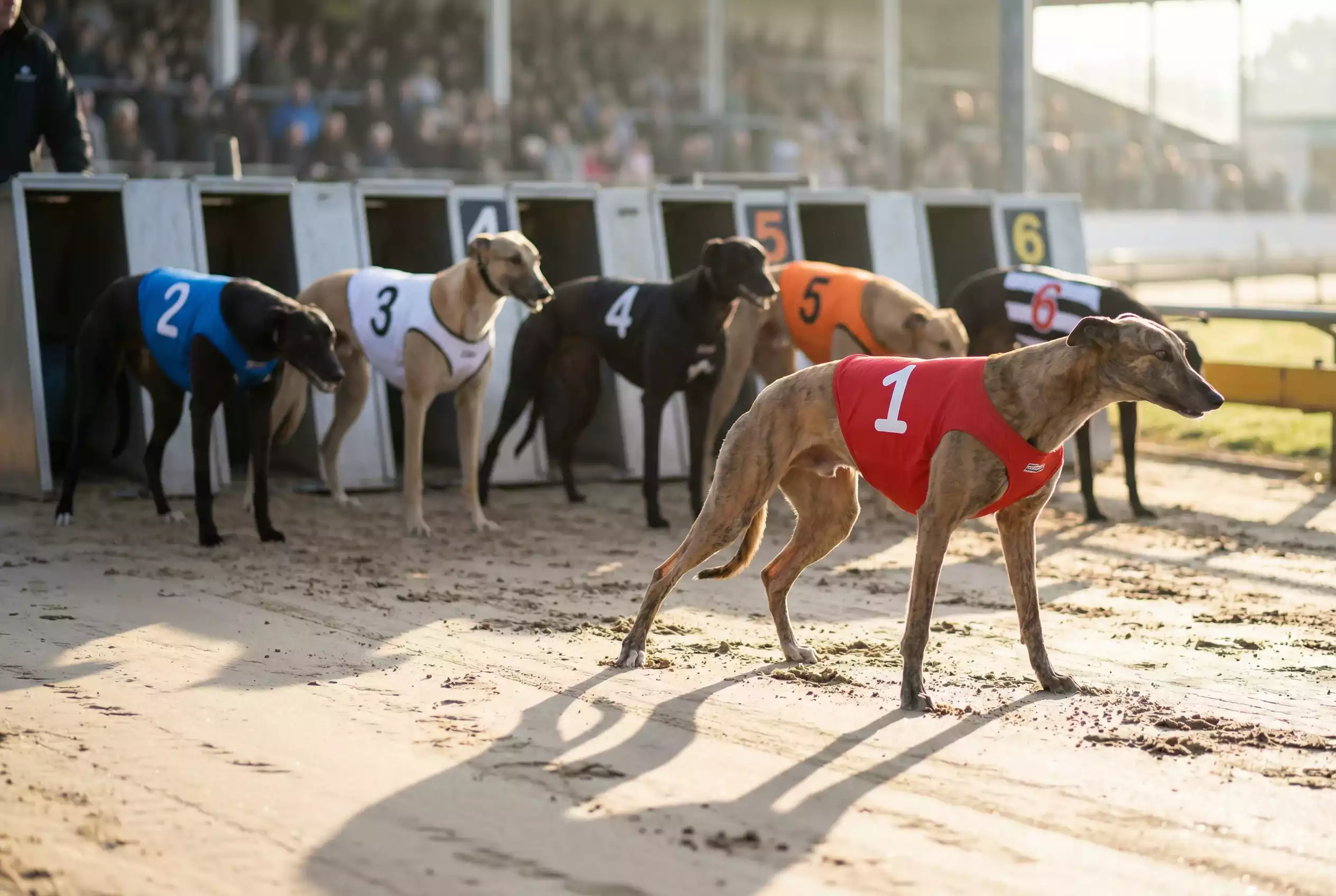
Walk into any licensed greyhound stadium in Britain and you will hear trainers and punters toss around phrases like “A2 bitch” or “dropped to D3”. These are not random codes. They are shorthand for the UK grading system, a performance-based hierarchy that determines which dogs race against each other and, crucially, which traps they are allocated.
Grading matters because it shapes the composition of every race card. A dog running in the wrong grade—too high and it struggles; too low and it dominates—distorts both competition and betting markets. The Greyhound Board of Great Britain oversees this system across all 19 licensed tracks, ensuring that grading decisions follow standardised criteria rather than local whim. Understanding how grades work is essential for anyone who wants to read a race card properly or make sense of trap allocation.
Grade and seeding decide the box: seeding explained.
The Grading Scale Explained
The UK grading system runs from A1 at the top to D4 at the bottom, though not every track uses the full range. Major stadiums like Towcester or Monmore operate deeper grading structures because they host larger fields and more frequent race cards. Smaller tracks may compress their grades, running only A through C divisions. The principle remains constant: grade A contains the fastest dogs, and the letters descend through B, C, and D as qualifying times slow.
Within each letter, numbers refine the hierarchy further. An A1 greyhound is the elite of the elites at that track—a dog whose recent performances rank among the very best over a given distance. A2 sits just below, still open class but a shade off the pace. By the time you reach A6 or A7 (where tracks use extended numbering), you are looking at dogs who belong in open company but have posted slower times or inconsistent runs recently.
The B, C, and D divisions follow the same internal logic. A B1 greyhound might be improving from lower ranks or recovering from a brief slump, while a D4 dog is either a novice finding its feet or a veteran whose legs no longer carry the same speed. Puppy races and maiden events sit outside this structure entirely, giving young or inexperienced dogs a chance to build form without being thrown into graded company too soon.
Each track publishes its own grading times—the benchmark splits that determine which letter a dog falls into. A dog qualifying for A grade at Romford, with its tight 400-metre circuit, might clock different raw times than one grading A at Towcester’s longer galloping track. This is not inconsistency; it is calibration. The grading system measures relative speed within a track’s specific conditions, not absolute speed across all venues. A punter comparing dogs from different stadiums must account for this variation. Raw times alone can mislead.
From grade to trap, every step is earned. That phrase captures the essence: no dog is assigned a grade arbitrarily. Every promotion or demotion reflects what happened on the track.
How Grades Are Calculated
Grading decisions are driven by recent race times. Racing managers at each track review a dog’s last few performances—typically the most recent three to five runs—and compare those times against the benchmark thresholds for each grade. A dog that consistently beats the B1 cut-off will be promoted into A grade. One that slips below the C3 threshold faces demotion to D. The process is mechanical in principle, though racing managers retain discretion for edge cases.
Distance matters enormously. A greyhound graded A2 over 480 metres might only manage B3 over 680 metres, or vice versa. Tracks therefore maintain separate grading ladders for each race distance they offer. At Romford, where 400m and 575m are standard, a dog carries distinct grades for short and standard trips. This prevents sprint specialists from being forced into staying races where they lack stamina, and stops stayers from being outpaced in dashes.
Winning triggers automatic reassessment. Under GBGB rules, any dog that wins a race must have its grade reviewed before its next outing. Consecutive victories often push a dog up a level, while a pattern of defeats—particularly trailing finishes—may result in dropping. The system self-corrects rapidly. A dog in the wrong grade tends not to stay there long, because its results expose the mismatch.
Trainers cannot cherry-pick favourable grades. While they choose which races to enter, the grading system locks them into a bracket based on performance. A trainer wanting to enter a B3 race with an A1 dog would be refused. Conversely, sandbagging—deliberately running a dog slowly to drop its grade—is monitored and can lead to disciplinary action. The integrity of graded races depends on dogs being placed where their form says they belong.
What the grading system does not account for is running style. A fast-finishing wide runner and a front-running railer might share the same grade yet require very different trap positions. That is where seeding enters the picture.
The wider context is set out in our guide to UK greyhound traps.
Grading and Trap Allocation
Grading establishes who races whom. Seeding determines where each dog starts. These are complementary systems, not substitutes. Once a dog’s grade places it in a particular race, the seeding codes—R for railer, M for middle runner, W for wide runner—guide trap allocation. A dog graded B2 with an M seed will be drawn into traps 3 or 4, central positions suited to its running style. A B2 railer, by contrast, targets traps 1 or 2.
The link between grading and trap allocation explains why certain dogs consistently appear in the same box positions. Their grade puts them in a race; their seed puts them in a trap. As Tiffany Blackett, Executive Veterinarian at GBGB, noted: “We are delighted to share the latest progress report on GBGB’s long-term welfare strategy.” That progress includes maintaining a fair allocation system where dogs run from positions suited to their natural style, reducing collision risk and improving race integrity.
For punters, this connection matters. Studying a dog’s grade tells you the level of competition it faces. Studying its seed tells you whether it will have clear running room or potential crowding at the first bend. A graded race with six evenly matched dogs can still produce predictable outcomes if seeding places a strong railer in trap 1 against middle runners who lack early pace. The grade sets the stage; the seed writes the script.
GBGB’s automated draw system, introduced with cryptographic randomisation, ensures that trap allocation within seeding bands is genuinely random. No trainer can game the draw. No track can favour local kennels. The 355,682 races run across UK tracks in 2024 all followed this standardised process, reinforcing the credibility of graded competition.
Key Takeaway
The UK grading system is the backbone of fair greyhound racing. It sorts dogs by proven ability, prevents mismatches, and feeds directly into trap allocation through the seeding process. Grades are not static labels—they shift with every win, every defeat, every change in a dog’s form. For punters, understanding grading means understanding why certain dogs appear in certain races and why their trap positions follow predictable patterns. From grade to trap, every step is earned. That principle keeps the sport honest and the betting markets meaningful.
