
Introduction
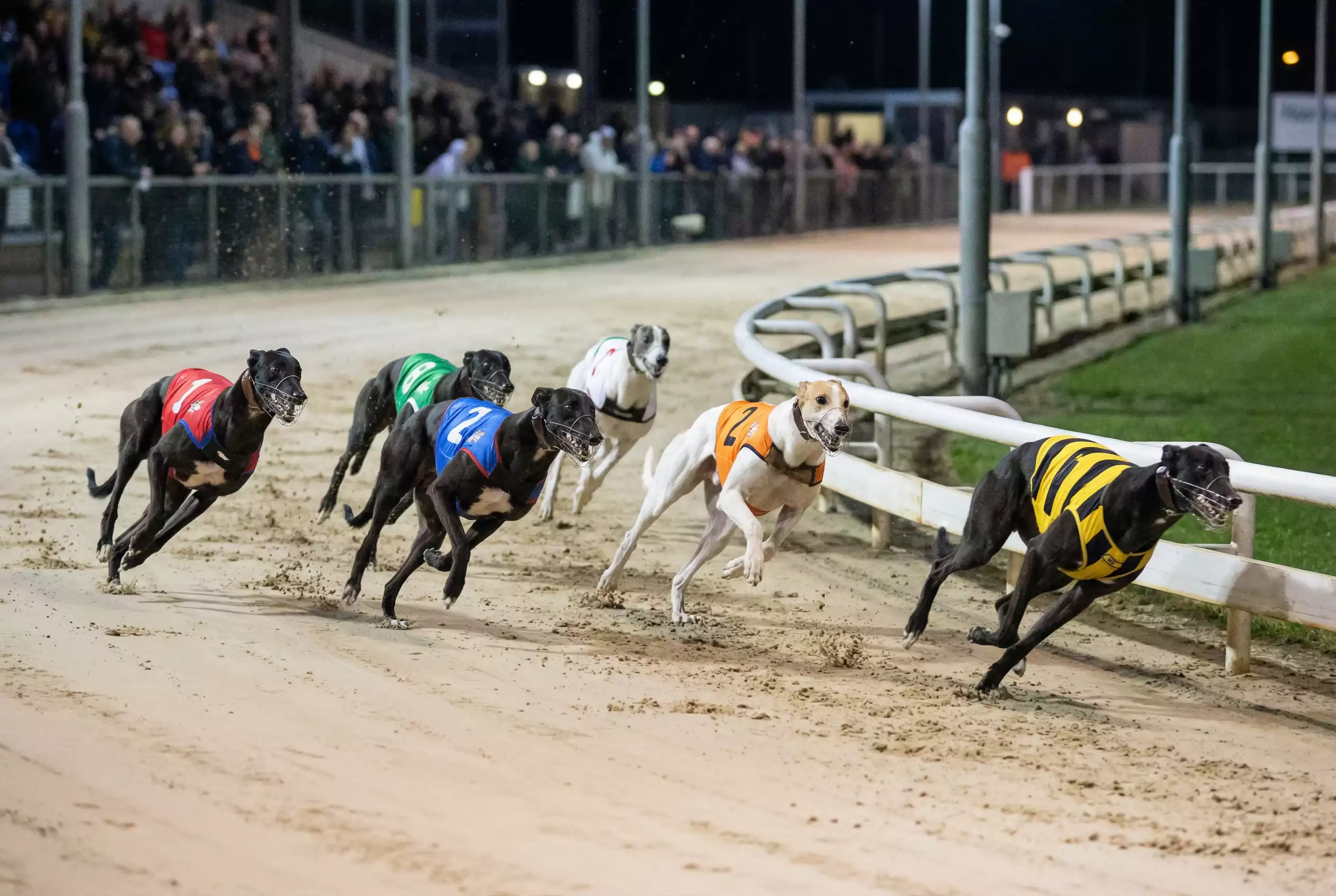
Every greyhound race begins with six dogs leaving six traps at the same moment. Within seconds, those dogs must negotiate the first bend, and where they started often determines where they finish. The inside versus outside debate sits at the heart of trap-based analysis: does the rail offer an unbeatable advantage, or can the outside position avoid trouble and still win? The answer depends on the track, the seeding, and the dogs themselves.
Position is relative—track and dog make it absolute. A trap that dominates at one venue may struggle at another. A wide-running dog seeded correctly in Trap 6 can outperform a railer drawn on the inside if the track geometry allows for it. Understanding when inside traps hold genuine value and when outside positions deserve respect is the difference between informed betting and guesswork. Bookmakers price these markets tightly, so an edge requires knowing your track better than the average punter.
The inside box has its own page: trap 1.
The Inside Position Advantage
Traps 1, 2, and 3 are often grouped together as inside positions. Trap 1 hugs the rail; Trap 2 sits one berth out; Trap 3 occupies the inner edge of the middle. At many British tracks, these three traps collectively outperform the outside group, though the reasons vary depending on which trap you examine.
Trap 1 benefits from proximity to the running rail. Dogs that break cleanly and hold their line travel the shortest possible distance around every bend. At a venue like Towcester, where the bend geometry punishes wide running, Trap 1 posts a win rate approaching 20% according to OLBG’s 2025 statistics—well above the 16.67% baseline. The seeding system compounds this advantage: railers, dogs naturally inclined to run tight, are placed in Trap 1 under GBGB rules. Form meets position, and the result is a statistically significant edge.
Trap 3 tends to be the best performer overall. It avoids the immediate crowding risk that Trap 1 faces while still offering a favourable route around bends. Dogs seeded here are typically middle runners—versatile animals that can cut inside or drift outside depending on how the race unfolds. That flexibility translates to consistent results across different track configurations. Middle runners also tend to be graded into competitive races, which means they often arrive in Trap 3 with strong form.
Trap 2 sits between these two, often overlooked by bettors focused on the extremes. Its performance is neither spectacular nor poor, reflecting its role as a buffer zone. In races where Trap 1 breaks slowly or Trap 3 meets interference, Trap 2 sometimes inherits a clean run to the bend. It rarely tops the statistical table but remains a steady presence in the middle of the pack.
The inside advantage becomes more pronounced in wet conditions. Soft going slows outside runners who must travel further, while inside traps gain traction through familiar camber. Check the weather forecast before placing a position-based bet—rain can shift the balance decisively toward the rail.
When Outside Works Better
Traps 4, 5, and 6 are classified as outside positions. Conventional wisdom says they face a longer journey around bends and more traffic at the first turn. Conventional wisdom is not always right.
At certain tracks, the outside draw avoids the crowding that derails inside runners. When a field is packed with fast breakers contesting the inside line, Trap 6 can sweep wide with clear air and arrive at the back straight unimpeded. Harlow provides the clearest example: Trap 6 achieves a 21% win rate there, making it the best-performing trap at that venue. Wide runners seeded appropriately thrive when geometry allows them to use their preferred line.
Track configuration is the key variable. Circuits with longer run-ups to the first bend give inside dogs time to sort themselves out before the turn; crowding diminishes, and inside traps maintain their edge. Shorter run-ups create chaos, and chaos benefits those who stay clear of it. Outside traps at such venues become legitimate contenders.
Wide runners are also seeded differently. GBGB rules place dogs with a proven preference for running around rivals in Traps 5 and 6. Backing an outside trap therefore means backing a dog whose style suits the position. When that style matches the track, the result can surprise those who assume inside always wins.
Open races—where dogs are not strictly graded—can also favour outside traps. In these contests, the seeding is less predictable, and the possibility of an inside pile-up increases. If the card contains several open handicaps, consider whether the outside draw might yield more clear runs than usual.
The wider context is set out in our guide to UK greyhound traps.
Track-Specific Patterns
No single rule applies to all 18 GBGB-licensed stadiums. Each track has its own geometry, its own surface, and its own historical bias. Identifying patterns at your chosen venue is essential for any serious position-based strategy.
Towcester’s pronounced inside bias makes Trap 1 the headline act. Bettors who focus on Towcester often back inside positions as a default, adjusting only when a known wide runner in Trap 6 has exceptional form. The margin at Towcester is large enough that ignoring it is a strategic error. The track’s countryside setting and tight bends punish dogs that run wide, making inside traps the natural choice for most race scenarios.
Harlow sits at the opposite end of the spectrum. Its layout allows wide runners to compete effectively, and Trap 6’s 21% rate proves the point. Punters who assume inside dominance across all tracks will misjudge value here repeatedly. Harlow’s configuration gives outside dogs the room they need to use their preferred line without losing ground, creating a rare venue where backing the rail is not automatically correct.
Most venues fall somewhere between these extremes. Romford favours Trap 3 without crushing the outside. Monmore shows variable bias depending on the meeting. Sheffield can shift between inside-friendly and neutral depending on the card composition. Tracking results over time—ideally several months of data—reveals where each venue sits on the spectrum. Do not rely on a single week’s results; trap bias expresses itself over hundreds of races, not dozens.
Bookmakers price inside-versus-outside markets based on historical averages, but those averages can be misleading if recent conditions have altered the pattern. A newly sanded track may ride differently from its old surface. A change in groundstaff practice can affect where dogs find the best grip. Stay current with venue-specific developments, and do not rely on statistics that predate significant maintenance work. The edge is in the detail.
Key Takeaway
Inside traps hold an advantage at most UK tracks, but that advantage is not universal. Track geometry, weather conditions, and seeding patterns all influence whether the rail or the wide line pays off. Position is relative—track and dog make it absolute. Build your analysis around the specific venue you are betting, not around generalisations that fail to account for Harlow’s wide bias or Towcester’s inside dominance. When Professor Madeleine Campbell set out her vision for the GBGB welfare strategy, she emphasised the need for an international template built on evidence. The same principle applies to trap betting: evidence beats assumption, and evidence comes from knowing your track.
